
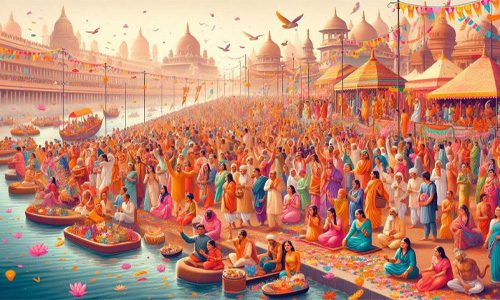
 Before exploring the technical and śāstric realities of Kumbha Mela, it is crucial to pause and reflect on its significance in today’s world.
From a purely social perspective, Kumbha Mela represents— 𝘢 𝘮𝘦𝘭𝘵𝘪𝘯𝘨 𝘱𝘰𝘵 𝘰𝘧 𝘱𝘩𝘪𝘭𝘰𝘴𝘰𝘱𝘩𝘪𝘦𝘴, 𝘳𝘢𝘤𝘦𝘴, 𝘯𝘢𝘵𝘪𝘰𝘯𝘴, 𝘭𝘢𝘯𝘨𝘶𝘢𝘨𝘦𝘴, 𝘢𝘯𝘥 𝘪𝘥𝘦𝘯𝘵𝘪𝘵𝘪𝘦𝘴. It signifies “𝙋𝙧𝙖𝙡𝙖𝙮𝙖” — 𝘯𝘰𝘵 𝘪𝘯 𝘵𝘩𝘦 𝘴𝘦𝘯𝘴𝘦 𝘰𝘧 𝘥𝘦𝘴𝘵𝘳𝘶𝘤𝘵𝘪𝘰𝘯 𝘣𝘶𝘵 𝘢𝘴 𝘵𝘩𝘦 𝘥𝘪𝘴𝘴𝘰𝘭𝘶𝘵𝘪𝘰𝘯 𝘰𝘧 𝘢𝘭𝘭 𝘥𝘪𝘴𝘵𝘪𝘯𝘤𝘵𝘪𝘰𝘯𝘴—mirroring the universal pralaya, where the Virāṭa Puruṣa withdraws everything into itself.
On an individual level, Kumbha Mela represents — 𝘢 𝘳𝘦𝘢𝘭𝘮 𝘧𝘰𝘳 𝘦𝘹𝘱𝘭𝘰𝘳𝘢𝘵𝘪𝘰𝘯, 𝘴𝘦𝘦𝘬𝘪𝘯𝘨, 𝘢𝘯𝘥 𝘪𝘮𝘮𝘦𝘳𝘴𝘪𝘯𝘨 𝘰𝘯𝘦𝘴𝘦𝘭𝘧 𝘪𝘯 𝘵𝘩𝘦 𝘣𝘰𝘶𝘯𝘥𝘭𝘦𝘴𝘴 𝘥𝘪𝘷𝘦𝘳𝘴𝘪𝘵𝘺 that flourishes within the social oneness described above. The interplay of social and personal perspectives weave a harmonious balance of 𝙗𝙝𝙚𝙙𝙖 (difference) and 𝙖𝙗𝙝𝙚𝙙𝙖 (oneness), epitomizing unity in diversity.
Kumbha Mela delivers a resounding message to modernists, liberals, and leftists, proclaiming its eternal essence. It stands as a 𝘵𝘪𝘮𝘦𝘭𝘦𝘴𝘴 𝘦𝘮𝘣𝘭𝘦𝘮 𝘰𝘧 𝘭𝘦𝘨𝘢𝘤𝘺 𝘢𝘯𝘥 𝘤𝘰𝘯𝘵𝘪𝘯𝘶𝘪𝘵𝘺—unshaken by eras, it has persisted in the past and will continue to flourish.
Moreover, Kumbha Mela exemplifies the profound strength of human connection. Without the need for advertisements or modern communication systems, people from across Bhārata and beyond gather here. A renowned educationalist once recalled a British governor in the early 20th century, asking how millions of people gathered for the Kumbha Snāna despite the lack of facilities. The educationalist replied, “The cost is just one anna, which means six paise.” The British officer was astonished. The educationalist further explained that the pañcāṅga (traditional Hindu almanac), found in every household, provided the dates, inspiring people to assemble from all corners.
This event highlights the soft power of Bharatiya identity, astonishing the world with its capacity to create a global impact, grounded in tradition and spiritual unity.
In conclusion, the Kumbha Mela at Triveṇī Saṅgama represents the confluence of many layers of life’s realities, merging into a deeper experience of “Amṛtatva”—𝘵𝘩𝘦 𝘦𝘴𝘴𝘦𝘯𝘤𝘦 𝘰𝘧 𝘦𝘹𝘪𝘴𝘵𝘦𝘯𝘤𝘦, 𝘵𝘩𝘦 𝘯𝘦𝘤𝘵𝘢𝘳 𝘰𝘧 𝘪𝘮𝘮𝘰𝘳𝘵𝘢𝘭𝘪𝘵𝘺.
𝘞𝘦 𝘤𝘢𝘯 𝘢𝘭𝘴𝘰 𝘭𝘦𝘢𝘳𝘯 𝘴𝘰𝘮𝘦 𝘵𝘦𝘤𝘩𝘯𝘪𝘤𝘢𝘭 𝘪𝘯𝘵𝘳𝘪𝘤𝘢𝘤𝘪𝘦𝘴 𝘰𝘧 𝘒𝘶𝘮𝘣𝘩𝘢 𝘔𝘦𝘭𝘢:
The Kumbha Mela is marked by the entry into Kumbha when Jupiter is in Taurus, and the Sun and Moon align in Capricorn (Mauni Amavasya). Jupiter, the planet of wisdom, spirituality and dharma, plays a pivotal role in the timing of Kumbha Mela. Its transit through these specific signs is believed to amplify spiritual energies and create heightened opportunities for enlightenment.
— 𝘛𝘩𝘦 𝘤𝘰𝘯𝘫𝘶𝘯𝘤𝘵𝘪𝘰𝘯𝘴 𝘰𝘧 𝘑𝘶𝘱𝘪𝘵𝘦𝘳, 𝘵𝘩𝘦 𝘚𝘶𝘯, 𝘢𝘯𝘥 𝘵𝘩𝘦 𝘔𝘰𝘰𝘯 𝘢𝘳𝘦 𝘷𝘪𝘦𝘸𝘦𝘥 𝘢𝘴 𝘤𝘳𝘦𝘢𝘵𝘪𝘯𝘨 𝘢𝘯 𝘢𝘶𝘴𝘱𝘪𝘤𝘪𝘰𝘶𝘴 𝘤𝘰𝘴𝘮𝘪𝘤 𝘢𝘭𝘪𝘨𝘯𝘮𝘦𝘯𝘵, 𝘯𝘶𝘳𝘵𝘶𝘳𝘪𝘯𝘨 𝘢𝘯 𝘦𝘯𝘷𝘪𝘳𝘰𝘯𝘮𝘦𝘯𝘵 𝘧𝘰𝘳 𝘴𝘱𝘪𝘳𝘪𝘵𝘶𝘢𝘭 𝘨𝘳𝘰𝘸𝘵𝘩.
The astrological foundation of Kumbh Mela traces back to the Samudra Manthan (churning of the ocean), during which the Amrita (nectar of immortality) spilled at the four sacred sites. The planetary positions during Kumbh Mela are believed to recreate the energy of that divine moment, making it the perfect time for spiritual practices. Taking a holy dip during Kumbh Mela is said to cleanse one’s karma and harmonize the individual with positive planetary energies.
—𝘛𝘩𝘦 𝘢𝘭𝘪𝘨𝘯𝘮𝘦𝘯𝘵 𝘰𝘧 𝘤𝘦𝘭𝘦𝘴𝘵𝘪𝘢𝘭 𝘣𝘰𝘥𝘪𝘦𝘴 𝘪𝘴 𝘣𝘦𝘭𝘪𝘦𝘷𝘦𝘥 𝘵𝘰 𝘮𝘢𝘨𝘯𝘪𝘧𝘺 𝘵𝘩𝘦 𝘴𝘱𝘪𝘳𝘪𝘵𝘶𝘢𝘭 𝘣𝘦𝘯𝘦𝘧𝘪𝘵𝘴 𝘰𝘧 𝘵𝘩𝘦𝘴𝘦 𝘳𝘪𝘵𝘶𝘢𝘭𝘴, 𝘰𝘧𝘧𝘦𝘳𝘪𝘯𝘨 𝘭𝘪𝘣𝘦𝘳𝘢𝘵𝘪𝘰𝘯 (𝘮𝘰𝘬𝘴𝘩𝘢) 𝘧𝘳𝘰𝘮 𝘵𝘩𝘦 𝘦𝘯𝘥𝘭𝘦𝘴𝘴 𝘤𝘺𝘤𝘭𝘦 𝘰𝘧 𝘣𝘪𝘳𝘵𝘩 𝘢𝘯𝘥 𝘥𝘦𝘢𝘵𝘩.
Astrologically, Kumbh Mela symbolizes the synchronization of cosmic energies with human life, unfolding a sacred window to profound spiritual awakening.
– Govinda Das (ISKCON Member)