
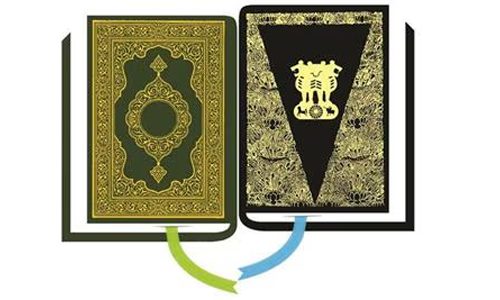
 A theist would generally claim that God is greater than Rastra, arguing that God embodies natural reality, whereas Rastra is an artificial construct.
For a theist, this is a simple and straightforward answer. However, for those with a dharmic worldview, the perspective shifts slightly. A dharmic individual recognizes Ishwara as the natural reality but does not consider Rastra an artificial construct.
𝘖𝘯𝘦 𝘱𝘦𝘳𝘴𝘰𝘯 𝘳𝘦𝘮𝘢𝘳𝘬𝘦𝘥:
“The people and the homeland they inhabit together form the body of a Nation, while the values cultivated by its people represent its soul. Together, they define the ‘National Life.’ If either is lost, the Nation ceases to exist—for a body without a soul is a corpse, and a soul without a body is nothing but a ghost.”
Abrahamic religions often undermine the concept of a nation. If asked whether Bharat or their God is greater, they would undoubtedly choose God. However, a practitioner of Sanatan Dharma would explain that their inner reality is to dedicate their life to worshipping God, but their external reality is to respect the land they belong to—especially Bharat Bhoomi, revered as a Punya Bhoomi. This is the sacred land where millions of sages practiced Sadhana, making the Bhumi as significant as Bhoomi Devi.
Whether it is Sri Ram or Sri Krishna, both respected their land. For example, Sri Krishna instructed the Yadavas to return to their homeland, which they had lost due to Kamsa’s atrocities. Kamsa’s death gave them the opportunity to come back.
𝘈𝘴 𝘮𝘦𝘯𝘵𝘪𝘰𝘯𝘦𝘥 𝘪𝘯 𝘵𝘩𝘦 𝘔𝘢𝘩𝘢 𝘗𝘶𝘳𝘢𝘯𝘢:
“In the tract of land known as Bhārata-varṣa, as in Ilāvṛta-varṣa, there are many mountains and rivers. Some of the mountains are known as Malaya, Mangala-prastha, Mainaka, Trikuta, Rsabha, Kutaka, Kollaka, Sahya, Devagiri, Rsyamuka, Sri-saila, Venkata, Mahendra, Varidhara, Vindhya, Suktiman, Rksagiri, Pariyatra, Drona, Citrakuta, Govardhana, Raivataka, Kakubha, Nilla, Gokamukha, Indrakila, and Kãmagiri. From their slopes flow countless rivers, including the Brahmaputra, Sona, Candravasa, Tamraparni, Kaveri, Godavari, Narmada, Yamuna, Sarasvati, and many others.” (𝘚𝘳𝘪𝘮𝘢𝘥 𝘉𝘩𝘢𝘨𝘢𝘷𝘢𝘵𝘢𝘮 𝟱.𝟭𝟵.𝟭𝟲)
The inhabitants of Bhārata-varṣa are purified because they always remember these rivers. Sometimes they chant the names of these rivers as mantras, and sometimes they go directly to the rivers to touch them and bathe in them. Thus the inhabitants of Bhārata-varṣa become purified. (𝘚𝘳𝘪𝘮𝘢𝘥 𝘉𝘩𝘢𝘨𝘢𝘷𝘢𝘵𝘢𝘮 𝟱.𝟭𝟵.𝟭𝟳-𝟭𝟴)
The people who take birth in this tract of land are divided according to the qualities of material nature — the modes of goodness [sattva-guṇa], passion [rajo-guṇa], and ignorance [tamo-guṇa]. Some are born as exalted personalities, others as ordinary human beings, and some as abominable, all according to their past karma. If one is trained properly by a bona fide spiritual master, following the social and spiritual divisions, their life becomes perfect.
(𝘚𝘳𝘪𝘮𝘢𝘥 𝘉𝘩𝘢𝘨𝘢𝘷𝘢𝘵𝘢𝘮 𝟱.𝟭𝟵.𝟭𝟵)
Thus, some Rastras are as old as antiquity. Prakriti (the land) and Purusha (the spirit) are integrated, much like Bharata and Ishwara are inseparable. Bharata is the place where Ishwara manifests repeatedly and eternally.
Therefore, Rastra and Ishwara are synonymous, just like Shakti and Shaktiman are non-different. Worshiping Rastra without Ishwara leads to obsessive materialism, while denying Rastra in favor of Ishwara is unrealistic, unattainable, and escapism.
The great Pandavas exemplify the ideal of protecting a dharmic nation while expressing deep affection for their beloved Bhagavan Sri Krishna. The very reason Sri Krishna taught Arjuna was to deepen his relationship with Him and to fight for the kingdom and Rastra. The Rastra was significant in helping the people to live with dignity and devotion.
𝘛𝘩𝘦𝘳𝘦𝘧𝘰𝘳𝘦 𝘸𝘩𝘦𝘯 𝘢𝘴𝘬𝘦𝘥, “𝘞𝘩𝘢𝘵 𝘪𝘴 𝘨𝘳𝘦𝘢𝘵𝘦𝘳—𝘙𝘢𝘴𝘵𝘳𝘢 𝘰𝘳 𝘎𝘰𝘥?” 𝘮𝘺 𝘢𝘯𝘴𝘸𝘦𝘳 𝘸𝘰𝘶𝘭𝘥 𝘣𝘦:
“bhārata-bhūmite haila manuṣya-janma yāra
janma sārthaka kari’ kara para-upakāra”
“One who has taken his birth as a human being in the land of India [Bhārata-varṣa] should make his life successful and work for the benefit of all other people.”
(𝘊𝘩𝘢𝘪𝘵𝘢𝘯𝘺𝘢 𝘊𝘩𝘢𝘳𝘪𝘵𝘢𝘮𝘳𝘪𝘵𝘢, 𝘈𝘥𝘪 𝟵.𝟰𝟭)
– Govinda Das (ISKCON Member)