One British writer, Matthew Arnold, in his thought-provoking essay Culture and Anarchy, observed that English society could broadly be divided into three distinct categories:
• 𝘽𝙖𝙧𝙗𝙖𝙧𝙞𝙖𝙣𝙨 — the aristocracy; they possess charm and manners, but are often excessively focused on privilege and external appearances.
• 𝙋𝙝𝙞𝙡𝙞𝙨𝙩𝙞𝙣𝙚𝙨 — the middle class; generally materialistic, deeply engrossed in commerce and the Protestant work ethic, yet lacking in spiritual or intellectual depth.
• 𝙋𝙤𝙥𝙪𝙡𝙖𝙘𝙚 — the working class; frequently unrefined and driven by basic instincts, yet Arnold believed they held the potential for growth through exposure to culture.
Though he spoke of England, his framework echoes across colonized societies, where similar social dynamics unfold in diverse forms.
Arnold also pointed to a deep-rooted tension in English life between two dominant forces:
• 𝙃𝙚𝙗𝙧𝙖𝙞𝙨𝙢 – representing moral discipline, obedience, conscience, and action. It forms the dominant current in English religious and ethical thinking.
• 𝙃𝙚𝙡𝙡𝙚𝙣𝙞𝙨𝙢 – embodying reason, beauty, spontaneity, and intellectual freedom.
Arnold didn’t advocate replacing one with the other but emphasized the need for balance. He believed Victorian society leaned too heavily toward Hebraism — doing what is right — while neglecting Hellenism — knowing and understanding what is right.
This conversation naturally extends into the Indic idea of Sanskriti, which is essentially the refinement of every dimension of human life. In contrast, Anarchy arises when life is shaped by a few isolated faculties — such as power, utility, or freedom — while the rest are entirely neglected.
Take, for instance, the modern liberal focus on individualism and freedom. These are undoubtedly vital, but when given unchecked emphasis, they can devolve into fragmentation and anarchy. Family bonds, cooperation, mutual respect, and the willingness to give the benefit of the doubt — all essential to a thriving society — begin to erode.
The Kannada philosopher D.V. Gundappa (DVG) offered a profound insight: Sanskriti means doing everything with a touch of refinement — not merely to perform, but to seek the deeper purpose behind every action and live in alignment with it.
𝙏𝙧𝙪𝙚 𝙘𝙪𝙡𝙩𝙪𝙧𝙚, 𝙩𝙝𝙚𝙣, 𝙞𝙨:
“𝘛𝘩𝘰𝘶𝘨𝘩𝘵𝘧𝘶𝘭𝘯𝘦𝘴𝘴 𝘪𝘯 𝘦𝘷𝘦𝘳𝘺 𝘢𝘴𝘱𝘦𝘤𝘵 𝘰𝘧 𝘭𝘪𝘧𝘦 — 𝘵𝘩𝘦 𝘢𝘣𝘪𝘭𝘪𝘵𝘺 𝘵𝘰 𝘤𝘳𝘪𝘵𝘪𝘤𝘢𝘭𝘭𝘺 𝘢𝘯𝘢𝘭𝘺𝘻𝘦 𝘵𝘩𝘦 𝘯𝘢𝘵𝘶𝘳𝘦 𝘰𝘧 𝘵𝘩𝘪𝘯𝘨𝘴, 𝘵𝘰 𝘶𝘯𝘥𝘦𝘳𝘴𝘵𝘢𝘯𝘥 𝘰𝘵𝘩𝘦𝘳𝘴 𝘯𝘰𝘵 𝘴𝘶𝘱𝘦𝘳𝘧𝘪𝘤𝘪𝘢𝘭𝘭𝘺 𝘣𝘶𝘵 𝘸𝘪𝘵𝘩 𝘴𝘦𝘯𝘴𝘪𝘵𝘪𝘷𝘪𝘵𝘺, 𝘢 𝘳𝘦𝘧𝘪𝘯𝘦𝘥 𝘵𝘢𝘴𝘵𝘦 𝘪𝘯 𝘩𝘶𝘮𝘢𝘯 𝘳𝘦𝘭𝘢𝘵𝘪𝘰𝘯𝘴𝘩𝘪𝘱𝘴, 𝘢 𝘤𝘰𝘮𝘮𝘪𝘵𝘮𝘦𝘯𝘵 𝘵𝘰 𝘥𝘩𝘢𝘳𝘮𝘢, 𝘢𝘯𝘥 𝘢𝘯 𝘰𝘯𝘨𝘰𝘪𝘯𝘨 𝘫𝘰𝘶𝘳𝘯𝘦𝘺 𝘰𝘧 𝘴𝘦𝘭𝘧-𝘥𝘪𝘴𝘤𝘰𝘷𝘦𝘳𝘺 𝘢𝘯𝘥 𝘳𝘦𝘧𝘭𝘦𝘤𝘵𝘪𝘰𝘯.”
Recently, a politician shared an honest observation about his community. He said, “𝘞𝘦 𝘩𝘢𝘷𝘦 𝘮𝘢𝘯𝘺 𝘭𝘰𝘺𝘢𝘭 𝘱𝘦𝘰𝘱𝘭𝘦, 𝘣𝘶𝘵 𝘷𝘦𝘳𝘺 𝘧𝘦𝘸 𝘦𝘯𝘵𝘳𝘦𝘱𝘳𝘦𝘯𝘦𝘶𝘳𝘴 — 𝘣𝘦𝘤𝘢𝘶𝘴𝘦 𝘤𝘰𝘰𝘱𝘦𝘳𝘢𝘵𝘪𝘰𝘯 𝘪𝘴 𝘮𝘪𝘴𝘴𝘪𝘯𝘨.” His point was simple: without cooperation, no society can flourish. In the Bhagavad Gita, Sri Krishna emphasizes this in the chapter on Karma Yoga — where cooperation with higher beings (devatas) is essential to sustaining even the basic functions of life.
Culture, therefore, isn’t just tradition — it is cooperation in motion, where individuals, families, and communities support one another in every dimension of life. Anarchy, on the other hand — knowingly or unknowingly — undermines this spirit of cooperation, breeding selfishness, isolation, vulnerability, and value-less ambition.
When this happens, society splits into extremes: those who have too much, yet care very little for others, and those who have too little, but are driven by resentment or an obsessive urge to “make it.” Tragically, when the latter rise, they often imitate the very qualities they once resented — without introspection or empathy for their former selves.
This paradox is visible in modern culture: we are mesmerized by fame, beauty, and celebrity — athletes, actors, influencers — while often overlooking educators, researchers, and those genuinely working to uplift others. When a famous sportsperson receives the Bharat Ratna, the nation’s highest civilian award, and a scientist receives it in the same year, few even notice the latter.
This is why Yudhisthira, when asked what the death of a human and a nation is, replied:
“𝘗𝘰𝘷𝘦𝘳𝘵𝘺 𝘪𝘴 𝘵𝘩𝘦 𝘥𝘦𝘢𝘵𝘩 𝘰𝘧 𝘢 𝘩𝘶𝘮𝘢𝘯 𝘣𝘦𝘪𝘯𝘨, 𝘢𝘯𝘥 𝘈𝘯𝘢𝘳𝘤𝘩𝘺 𝘪𝘴 𝘵𝘩𝘦 𝘥𝘦𝘢𝘵𝘩 𝘰𝘧 𝘢 𝘕𝘢𝘵𝘪𝘰𝘯.”
And here, poverty doesn’t mean merely the lack of wealth — it refers to the poverty of human connection, stability, empathy, and vision.
Anarchy is not merely the absence of a good ruler — it is the breakdown of shared values and principles. When people divide along lines of language, party, region, or exclusivist religious ideologies — and worse, when they believe in doing good only for those who think like them — anarchy takes root, often unintentionally.
In contrast, the Bhagavad Gita defines knowledge as the ability to see the same essence in all beings — beyond narrow boundaries of identity and belief:
“That knowledge by which one undivided spiritual nature is seen in all living entities, though they are divided into innumerable forms, you should understand to be in the mode of goodness.” ( 𝗕𝗚 𝟭𝟴.𝟮𝟬 )
“That knowledge by which one sees that in every different body there is a different type of living entity, you should understand to be in the mode of passion.” ( 𝗕𝗚 𝟭𝟴.𝟮𝟭 )
“And that knowledge by which one is attached to one kind of work as the all in all, without knowledge of the truth, and which is very meager, is said to be in the mode of darkness.” ( 𝗕𝗚 𝟭𝟴.𝟮𝟮 )
The last one is particularly striking — when people define their entire existence by just their profession or a narrow identity, it leads to a subtle form of anarchy: a disconnected, fragmented life that lacks meaning and quietly contributes to the further disintegration of society.
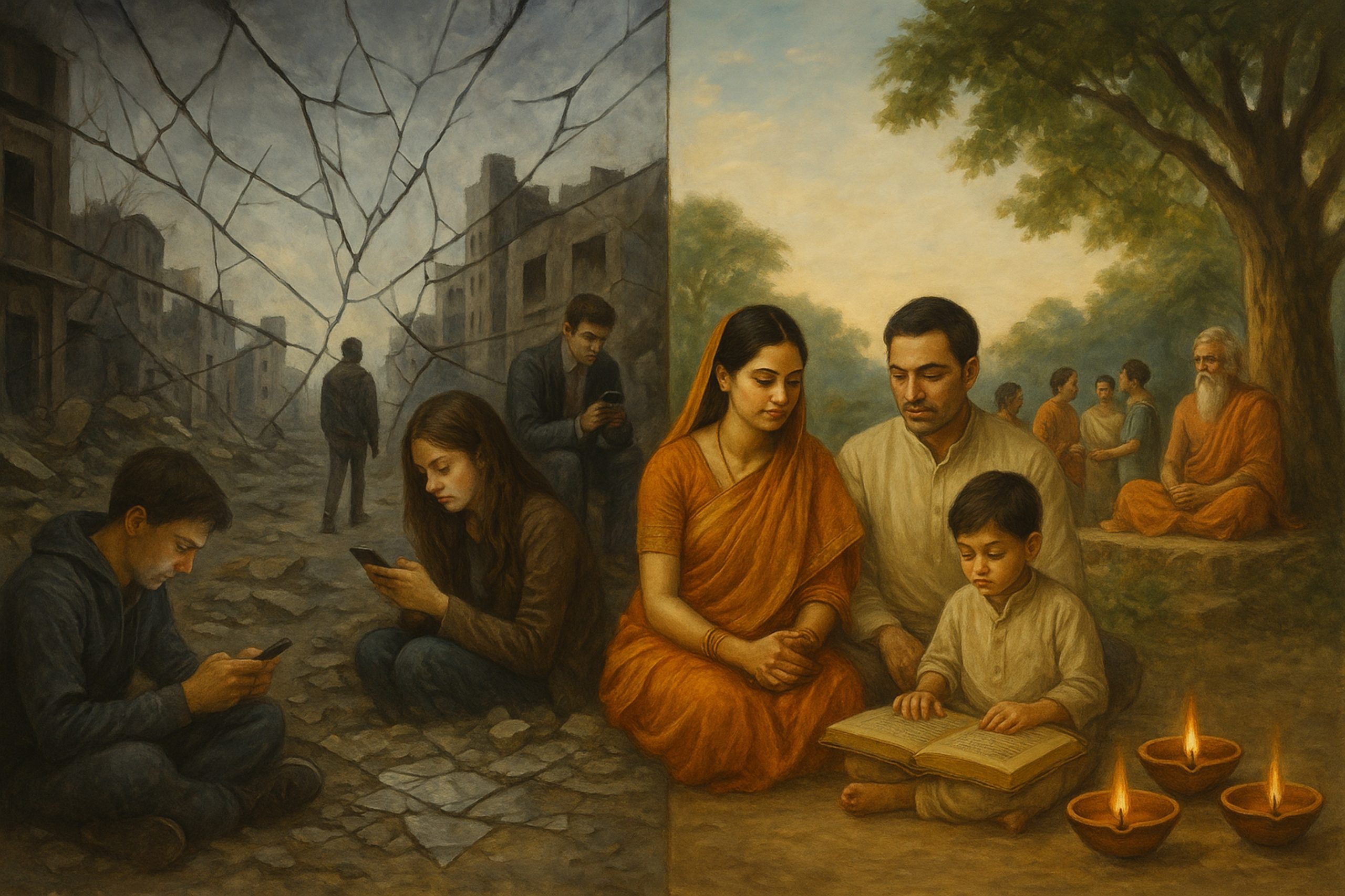
In essence, Sanskriti is integration — of thought, action, values, and relationships. Anarchy is isolation — of self from society, of action from reflection, of knowledge from purpose.
The consequences of the two paths are worlds apart. And so, the question remains: Which side do we choose to nurture?
– 𝘈𝘯𝘢𝘳𝘤𝘩𝘺 𝘪𝘴 𝘦𝘧𝘧𝘰𝘳𝘵𝘭𝘦𝘴𝘴 — it arises naturally when we let go.
– 𝘚𝘢𝘯𝘴𝘬𝘳𝘪𝘵𝘪, 𝘩𝘰𝘸𝘦𝘷𝘦𝘳, 𝘪𝘴 𝘪𝘯𝘵𝘦𝘯𝘵𝘪𝘰𝘯𝘢𝘭 — it requires discipline, vision, and empathy in every sphere of life.
𝙄𝙩𝙨 𝙚𝙨𝙨𝙚𝙣𝙘𝙚 𝙞𝙨 𝙗𝙚𝙖𝙪𝙩𝙞𝙛𝙪𝙡𝙡𝙮 𝙥𝙧𝙚𝙨𝙚𝙧𝙫𝙚𝙙 𝙞𝙣:
sarve santu nirāmayāḥ
𝘔𝘢𝘺 𝘢𝘭𝘭 𝘣𝘦 𝘧𝘳𝘦𝘦 𝘧𝘳𝘰𝘮 𝘪𝘭𝘭𝘯𝘦𝘴𝘴 𝘢𝘯𝘥 𝘴𝘶𝘧𝘧𝘦𝘳𝘪𝘯𝘨
sarve bhadrāṇi paśyantu
𝘔𝘢𝘺 𝘢𝘭𝘭 𝘴𝘦𝘦 𝘰𝘯𝘭𝘺 𝘸𝘩𝘢𝘵 𝘪𝘴 𝘢𝘶𝘴𝘱𝘪𝘤𝘪𝘰𝘶𝘴
– Govind Das (ISKCON MEMBER)