
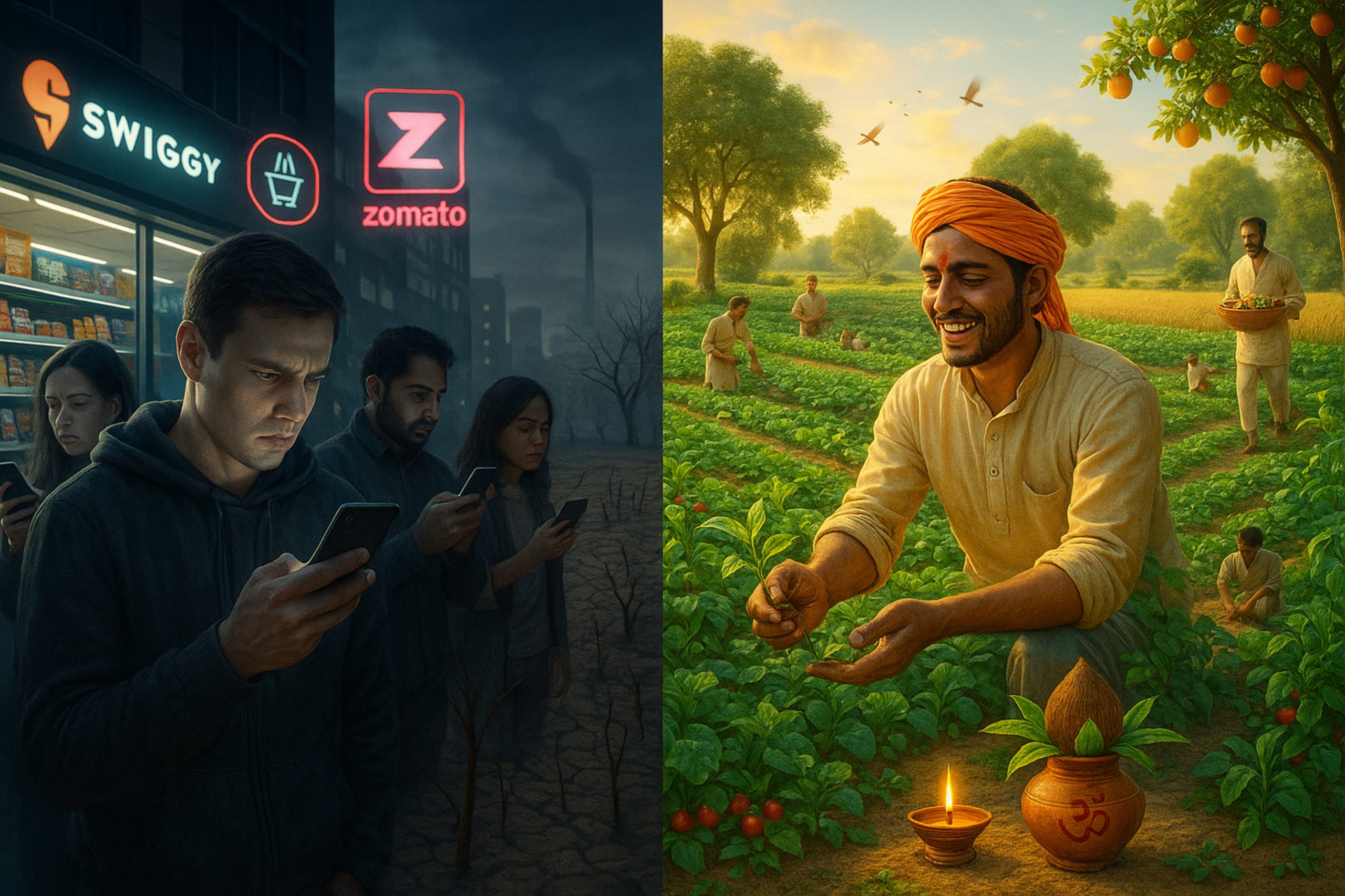
Farming and dharma is somewhere between screens and supermarkets, we’ve forgotten the soil. Today, the consumer is least interested in how food grows—grains, vegetables, fruits. The process of cultivation, the hardship behind each morsel, is a forgotten truth. With food delivery apps like Zomato and Swiggy reducing meals to cold digital transactions, 𝙩𝙝𝙚 𝙨𝙖𝙘𝙧𝙚𝙙 𝙚𝙘𝙤𝙨𝙮𝙨𝙩𝙚𝙢 𝙤𝙛 𝙜𝙧𝙤𝙬𝙞𝙣𝙜, 𝙘𝙤𝙤𝙠𝙞𝙣𝙜, 𝙨𝙚𝙧𝙫𝙞𝙣𝙜, 𝙖𝙣𝙙 𝙘𝙤𝙣𝙨𝙪𝙢𝙞𝙣𝙜, 𝙨𝙩𝙖𝙣𝙙𝙨 𝙛𝙧𝙖𝙘𝙩𝙪𝙧𝙚𝙙. When a society forgets its farmers, how can it feel gratitude—or even basic curiosity—for the source of its sustenance? This disconnection is not just sad; it is dangerous.
Neither socialist nor capitalist paradigms seem to support natural, dharmic entrepreneurship. Capitalists find farming too slow, too uncertain. Socialists, in their obsession with redistribution, often overlook the dignity of creation. 𝙏𝙝𝙚𝙮 𝙛𝙤𝙧𝙜𝙚𝙩—𝙧𝙚𝙖𝙡 𝙚𝙦𝙪𝙖𝙡𝙞𝙩𝙮 𝙙𝙤𝙚𝙨𝙣’𝙩 𝙗𝙚𝙜𝙞𝙣 𝙗𝙮 𝙜𝙧𝙖𝙗𝙗𝙞𝙣𝙜 𝙛𝙧𝙤𝙢 𝙩𝙝𝙚 𝙧𝙞𝙘𝙝, 𝙗𝙪𝙩 𝙗𝙮 𝙚𝙢𝙥𝙤𝙬𝙚𝙧𝙞𝙣𝙜 𝙩𝙝𝙚 𝙬𝙞𝙡𝙡𝙞𝙣𝙜.
Environmentalists speak endlessly of climate change and pollution, but how many ever plant a tree, touch the soil, or grow their own food? Even religious communities consume massive amounts of resources for rituals, yet there’s barely a whisper about cultivating land or growing what they eat. 𝘽𝙝𝙖𝙧𝙖𝙩—𝙤𝙪𝙧 𝙨𝙖𝙘𝙧𝙚𝙙 𝙡𝙖𝙣𝙙—𝙝𝙤𝙡𝙙𝙨 𝙫𝙖𝙨𝙩 𝙨𝙩𝙧𝙚𝙩𝙘𝙝𝙚𝙨 𝙤𝙛 𝙛𝙚𝙧𝙩𝙞𝙡𝙚 𝙨𝙤𝙞𝙡, 𝙘𝙧𝙮𝙞𝙣𝙜 𝙤𝙪𝙩 𝙛𝙤𝙧 𝙘𝙖𝙧𝙚, 𝙣𝙤𝙩 𝙣𝙚𝙜𝙡𝙚𝙘𝙩.
Scriptures glorify planting trees, digging wells—real acts of sustainability. Yet such deeds are rarely highlighted today. Katha is effortless; 𝙩𝙧𝙪𝙚 𝙧𝙚𝙨𝙥𝙚𝙘𝙩 𝙛𝙤𝙧 𝙣𝙖𝙩𝙪𝙧𝙚 𝙙𝙚𝙢𝙖𝙣𝙙𝙨 𝙖𝙘𝙩𝙞𝙤𝙣—𝙣𝙤𝙩 𝙟𝙪𝙨𝙩 𝙞𝙣𝙘𝙚𝙣𝙨𝙚 𝙨𝙢𝙤𝙠𝙚 𝙖𝙣𝙙 𝙖𝙢𝙥𝙡𝙞𝙛𝙞𝙚𝙙 𝙨𝙤𝙪𝙣𝙙.
The roots of wisdom are being cut. The noblest professions—𝙛𝙖𝙧𝙢𝙞𝙣𝙜 𝙖𝙣𝙙 𝙩𝙚𝙖𝙘𝙝𝙞𝙣𝙜—𝙖𝙧𝙚 𝙦𝙪𝙞𝙚𝙩𝙡𝙮 𝙗𝙚𝙞𝙣𝙜 𝙖𝙗𝙖𝙣𝙙𝙤𝙣𝙚𝙙. Farmers urge their children to leave the fields. Teachers no longer wish their children to teach. 𝙏𝙝𝙚𝙨𝙚 𝙖𝙧𝙚 𝙣𝙤𝙩 𝙟𝙪𝙨𝙩 𝙥𝙧𝙤𝙛𝙚𝙨𝙨𝙞𝙤𝙣𝙨; 𝙩𝙝𝙚𝙮 𝙖𝙧𝙚 𝙡𝙚𝙜𝙖𝙘𝙞𝙚𝙨. 𝘼𝙣𝙙 𝙬𝙚 𝙖𝙧𝙚 𝙬𝙖𝙩𝙘𝙝𝙞𝙣𝙜 𝙩𝙝𝙚𝙢 𝙙𝙞𝙚.
The rituals of Sanatana Dharma were once deeply interwoven with sustenance and life. They were grounded in reality, rooted in gratitude, and filled with substance. 𝙏𝙤𝙙𝙖𝙮, 𝙬𝙚’𝙫𝙚 𝙧𝙚𝙥𝙡𝙖𝙘𝙚𝙙 𝙙𝙚𝙥𝙩𝙝 𝙬𝙞𝙩𝙝 𝙙𝙞𝙨𝙥𝙡𝙖𝙮. Rituals aren’t wrong—but when they overshadow the very life they were meant to honor, we must pause.
Recently, I met farmers who broke that cycle. They’re not repeating the same methods, hoping for miracles. They’re learning. Innovating. Practicing multilayer farming—growing intelligently, conserving energy, healing the soil. One of them gave up a medical seat—to become a farmer. And the reaction? He was ridiculed. Rejected. As if, 𝙘𝙝𝙤𝙤𝙨𝙞𝙣𝙜 𝙩𝙤 𝙝𝙚𝙖𝙡 𝙩𝙝𝙚 𝙡𝙖𝙣𝙙 𝙞𝙣𝙨𝙩𝙚𝙖𝙙 𝙤𝙛 𝙝𝙪𝙢𝙖𝙣 𝙗𝙤𝙙𝙞𝙚𝙨 𝙬𝙖𝙨 𝙨𝙤𝙢𝙚 𝙠𝙞𝙣𝙙 𝙤𝙛 𝙗𝙚𝙩𝙧𝙖𝙮𝙖𝙡. 𝙃𝙤𝙬 𝙖𝙗𝙨𝙪𝙧𝙙—𝙩𝙝𝙖𝙩 𝙖 𝙛𝙖𝙧𝙢𝙚𝙧’𝙨 𝙨𝙤𝙣 𝙗𝙚𝙘𝙤𝙢𝙞𝙣𝙜 𝙖 𝙙𝙤𝙘𝙩𝙤𝙧 𝙞𝙨 𝙘𝙚𝙡𝙚𝙗𝙧𝙖𝙩𝙚𝙙 𝙖𝙨 𝙥𝙧𝙤𝙜𝙧𝙚𝙨𝙨, 𝙗𝙪𝙩 𝙖 𝙙𝙤𝙘𝙩𝙤𝙧 𝙘𝙝𝙤𝙤𝙨𝙞𝙣𝙜 𝙛𝙖𝙧𝙢𝙞𝙣𝙜 𝙞𝙨 𝙨𝙚𝙚𝙣 𝙖𝙨 𝙖 𝙛𝙖𝙡𝙡 𝙛𝙧𝙤𝙢 𝙜𝙧𝙖𝙘𝙚.
Yet this man chose to sow and he’s reaping transformation by training hundreds. The journey wasn’t easy—but it was deeply fulfilling. His soil breathes. His food carries energy, not just nutrients. His methods go beyond organic—into a realm of wholeness, where nature isn’t exploited, but honored. 𝙏𝙝𝙞𝙨 𝙞𝙨𝙣’𝙩 𝙟𝙪𝙨𝙩 𝙛𝙖𝙧𝙢𝙞𝙣𝙜. 𝙄𝙩’𝙨 𝙙𝙝𝙖𝙧𝙢𝙖 𝙞𝙣 𝙖𝙘𝙩𝙞𝙤𝙣.
It’s time we recognize this: food is not a commodity, and farming is not a fallback. It is foundational. We must remember what truly sustains us. 𝙒𝙝𝙚𝙣 𝙬𝙚 𝙡𝙤𝙨𝙚 𝙤𝙪𝙧 𝙛𝙖𝙧𝙢𝙚𝙧𝙨, 𝙬𝙚 𝙙𝙤𝙣’𝙩 𝙟𝙪𝙨𝙩 𝙡𝙤𝙨𝙚 𝙘𝙧𝙤𝙥𝙨—𝙬𝙚 𝙡𝙤𝙨𝙚 𝙘𝙪𝙡𝙩𝙪𝙧𝙚, 𝙘𝙤𝙣𝙣𝙚𝙘𝙩𝙞𝙤𝙣, 𝙖𝙣𝙙 𝙘𝙤𝙣𝙨𝙘𝙞𝙚𝙣𝙘𝙚.
𝙏𝙝𝙚 𝙧𝙚𝙫𝙞𝙫𝙖𝙡 𝙗𝙚𝙜𝙞𝙣𝙨 𝙣𝙤𝙩 𝙬𝙞𝙩𝙝 𝙥𝙤𝙡𝙞𝙘𝙞𝙚𝙨 𝙤𝙧 𝙥𝙡𝙖𝙩𝙛𝙤𝙧𝙢𝙨—𝙗𝙪𝙩 𝙬𝙞𝙩𝙝 𝙢𝙞𝙣𝙙𝙨𝙚𝙩𝙨. In choosing to grow, to nurture, and above all, to remember. Because, to reclaim the land is to restore a sacred connection, long forgotten.
– Govind Das (ISKCON MEMBER)