
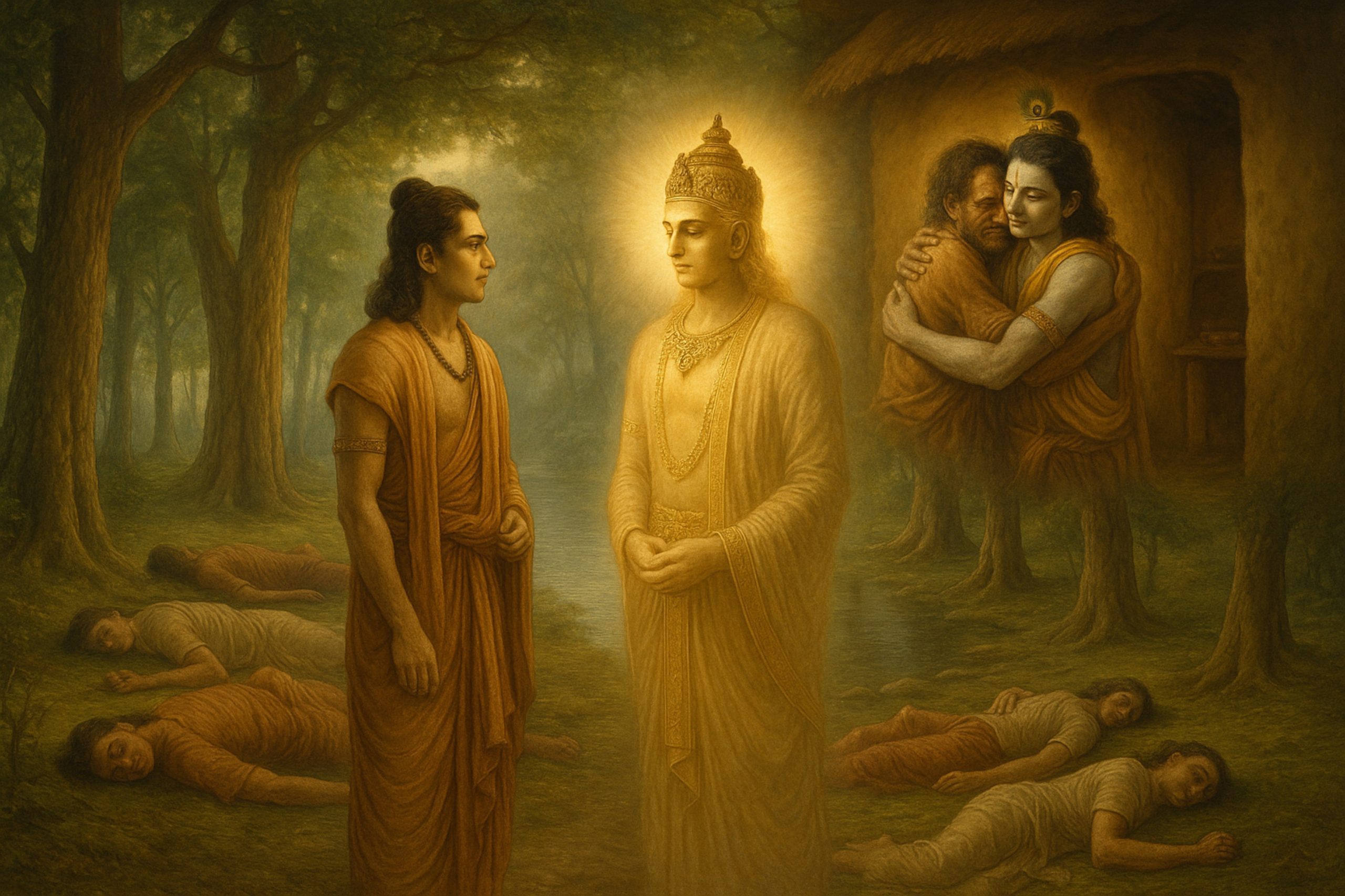
In the Mahabharata, the great Yaksha asked Yudhisthira Maharaj about friendship . Before the direly thirsty and exhausted King could drink water from the lake, he was obliged to respond to Yaksha in an effort to free his brothers from the clutches of death.
Yaksha asked,
“Who is a friend while travelling?
Who is a friend at home?
Or of the diseased?
And of the person who is about to die?”
Though his voice was faint due to unimaginable thirst, a fully confident Yudhisthira unhesitantly, replied,
“The travelling companion during a given journey is a friend,
one’s wife is the best-friend at home,
a doctor is a friend of the diseased,
and charity is the friend of the dying.”
Accordingly, diverse understandings of friendship exist depending on who is defining it. Adults, for example, need companionship to be practically beneficial and stable. Being a practical philosopher, Yudhisthira’s definition of friendship was purely pragmatic
Others, however, experience amity through emotions and feelings, and do not have Yudhisthira-like utility-based wisdom. Hence, the Mahabharata offers a variety of reasons of why friendships are built, such as nature, truce, material wealth and others’ influence
Friendships constructed on compatibility or similar natures, bring people together because they are naturally drawn to each other; there is no other agenda – besides friendship .The journey and end goal of such bonding, is friendship itself. Sri Krishna and Sudama are the epitomical examples of such a relationship. They did not aspire for any other benefit from each other, except love and affection. Similarly, Sri Krishna and Arjuna shared a similar companionship
– Govind Das (ISKCON MEMBER)