
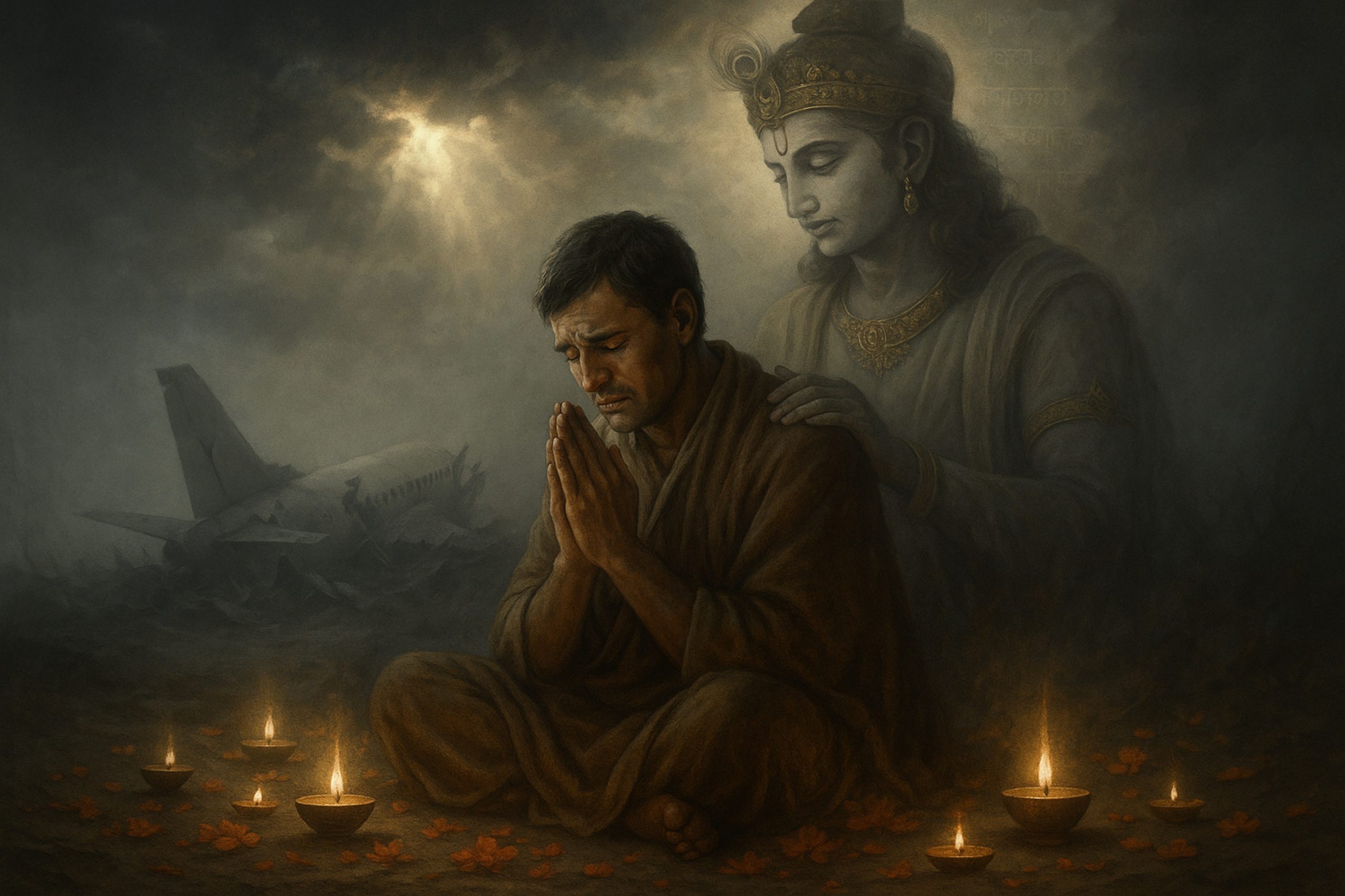
The tragic news of the plane crash, claiming the lives of 240 passengers, is profoundly heart-wrenching. One cannot help but ask—why so many? What was their fault? Such events defy any easy explanation. While one might invoke the concept of karma, it does little to ease the crushing grief borne by the bereaved families and society at large. The nation of Bharat can only mourn in stunned silence.
In the Mahabharata, after the devastating war, Dhritarashtra and Gandhari were offered solace by Sri Krishna, Srila Vyasadeva, Vidura, and Sanjaya. Yet, despite knowing her son’s faults, Gandhari Devi could not restrain her sorrow. The intensity of personal experience often surpasses philosophical understanding. This is why the thirteen-day period of mourning holds such profound significance. Philosophy and analysis may follow later; in the immediate aftermath of such loss, empathy is far more fitting than explanation.
Even though Gandhari’s sons died due to their own actions and the nature of war, Draupadi too endured the loss of her sons—though the causes differed, the grief was no less. Pain, regardless of its source, is universally felt. It takes time to come to terms with what has happened—both for those who ask why, and for those who may eventually uncover the how and why.
In such times, the most meaningful response is to extend consolation, offer emotional support, and raise heartfelt prayers for the departed souls and their grieving families.
May Sri Hari grant strength, emotional stability, and a deeper understanding of life to all those affected by this immense loss.
We also urge the administration and the airline industry to extend tangible support and to ensure that all matters concerning the survivors’ families are handled with sensitivity, efficiency, and compassion.
Ultimately, may more people be inspired to seek the deeper truths of life as revealed in our sacred scriptures—especially the Bhagavad Gita.
– Govinda Das (ISKCON Member)