In the quest for truth, we are often obstructed by bias — those invisible, yet powerful filters through which we interpret reality. We may passionately defend our party, caste, group, or ideology, but truth-seeking demands something far rarer: the courage to doubt ourselves, to examine and question our most cherished assumptions.
The concept of cognitive bias was introduced by psychologists Daniel Kahneman and Amos Tversky in the 1970s.
𝘛𝘸𝘦𝘭𝘷𝘦 𝘤𝘰𝘮𝘮𝘰𝘯 𝘤𝘰𝘨𝘯𝘪𝘵𝘪𝘷𝘦 𝘣𝘪𝘢𝘴𝘦𝘴 𝘵𝘩𝘢𝘵 𝘴𝘶𝘣𝘵𝘭𝘺 𝘥𝘪𝘴𝘵𝘰𝘳𝘵 𝘰𝘶𝘳 𝘫𝘶𝘥𝘨𝘮𝘦𝘯𝘵 𝘢𝘯𝘥 𝘴𝘩𝘢𝘱𝘦 𝘵𝘩𝘦 𝘸𝘢𝘺 𝘸𝘦 𝘵𝘩𝘪𝘯𝘬:
1. 𝗖𝗼𝗻𝗳𝗶𝗿𝗺𝗮𝘁𝗶𝗼𝗻 𝗕𝗶𝗮𝘀 – Seeking only what confirms our beliefs
2. 𝗔𝗻𝗰𝗵𝗼𝗿𝗶𝗻𝗴 𝗕𝗶𝗮𝘀 – Relying heavily on the first piece of information
3. 𝗔𝘃𝗮𝗶𝗹𝗮𝗯𝗶𝗹𝘁𝘆 𝗛𝗲𝘂𝗿𝗶𝘀𝘁𝗶𝗰 – Believing what’s most readily recalled is true
4. 𝗛𝗶𝗻𝗱𝘀𝗶𝗴𝗵𝘁 𝗕𝗶𝗮𝘀 – Believing we “knew it all along” after something happens
5. 𝗗𝘂𝗻𝗻𝗶𝗻𝗴-𝗞𝗿𝘂𝗴𝗲𝗿 𝗘𝗳𝗳𝗲𝗰𝘁 – Incompetent people overestimating their ability
6. 𝗟𝗼𝘀𝘀 𝗔𝘃𝗲𝗿𝘀𝗶𝗼𝗻 – Losses hurt more than equivalent gains feel good
7. 𝗕𝗮𝗻𝗱𝘄𝗮𝗴𝗼𝗻 𝗘𝗳𝗳𝗲𝗰𝘁 – Believing something is true because many believe it
8. 𝗦𝗲𝗹𝗳-𝗦𝗲𝗿𝘃𝗶𝗻𝗴 𝗕𝗶𝗮𝘀 – Attributing success to self, failure to others
9. 𝗙𝘂𝗻𝗱𝗮𝗺𝗲𝗻𝘁𝗮𝗹 𝗔𝘁𝘁𝗿𝗶𝗯𝘂𝘁𝗶𝗼𝗻 𝗘𝗿𝗿𝗼𝗿 – Judging others by character, not situation
10. 𝗡𝗲𝗴𝗮𝘁𝗶𝘃𝗶𝘁𝘆 𝗕𝗶𝗮𝘀 – Giving more weight to negative events
11. 𝗢𝘃𝗲𝗿𝗰𝗼𝗻𝗳𝗶𝗱𝗲𝗻𝗰𝗲 𝗕𝗶𝗮𝘀 – Being more confident than accurate
12. 𝗦𝘂𝗻𝗸 𝗖𝗼𝘀𝘁 𝗙𝗮𝗹𝗹𝗮𝗰𝘆 – Continuing something just because we invested in it
These are not mere psychological quirks; they are formidable barriers to truth. Until we recognize them, we remain devotees of tribal loyalty rather than seekers of clarity.
In the Mahābhārata, when Yudhiṣṭhira Mahārāja sought counsel regarding the Rājasūya sacrifice, he hesitated to approach those closest to him. Why? Because he saw through the haze — he recognized that many were influenced by loyalty, fear, or emotional attachments.
Instead, he turned to Śrī Krishna, whose mind was detached and whose vision was rooted in reason. Krishna’s guidance stood above the fray of prejudice. Others spoke with affection or resentment; Krishna spoke with discernment. When the world is crowded with echoes, the voice of detachment becomes revolutionary.
The psychology that Krishna presents in the Gītā is not only divine, but pedagogically brilliant — it is the psychology of a good teacher. A teacher is eager to give, but learning must be the student’s responsibility. The teacher cannot impose age or authority upon the child, but must help the child discover their own svabhāva.
Contrast this with Droṇācārya. Though a revered guru, his teaching was laced with a hidden agenda. He trained the Pāṇḍavas and Kauravas not merely to build character, but to make them instruments of his personal vendetta against Drupada. This was education, yes — but education weaponized by ego. Teaching becomes toxic when its purpose is not liberation, but retribution.
Human psychology, driven by a range of emotions, rests on a foundational flaw — self-centeredness. For such a mind, bias is not an exception but the default setting. And when such minds gather under the banners of caste, language, religion, or nationalism, their collective obsession becomes a force of destruction. Expecting them to act rationally is like expecting fire to cool water.
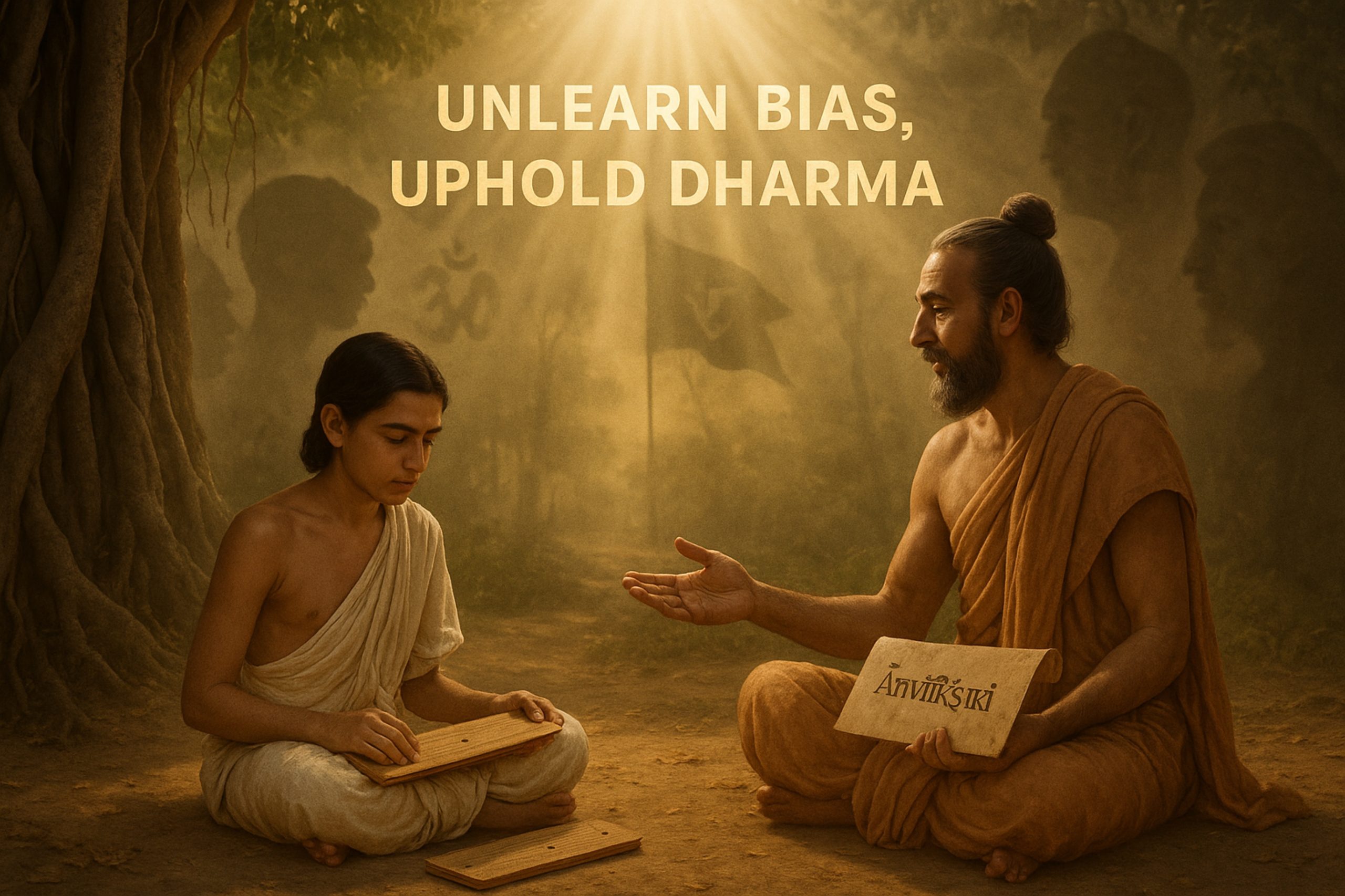
This is precisely why Bhāratīya education, in its ideal form, was designed to separate the student from these biases. The gurukula was not merely an academic environment; it was a psychological deprogramming centre. The guru held no political or personal agenda — only the sacred duty to awaken the ātman in the child. The journey was toward self-knowledge, culminating in the realization:
“𝘼𝙝𝙖𝙢 𝘽𝙧𝙖𝙝𝙢𝙖𝙨𝙢𝙞” —𝙄 𝙖𝙢 𝘽𝙧𝙖𝙝𝙢𝙖𝙣.
𝘞𝘩𝘦𝘳𝘦 𝘵𝘩𝘪𝘴 𝘵𝘳𝘶𝘵𝘩 𝘪𝘴 𝘬𝘯𝘰𝘸𝘯, 𝘣𝘪𝘢𝘴𝘦𝘴 𝘥𝘪𝘴𝘴𝘰𝘭𝘷𝘦. 𝘞𝘩𝘦𝘳𝘦 𝘵𝘩𝘪𝘴 𝘪𝘴 𝘧𝘰𝘳𝘨𝘰𝘵𝘵𝘦𝘯, 𝘪𝘥𝘦𝘯𝘵𝘪𝘵𝘺 𝘣𝘦𝘤𝘰𝘮𝘦𝘴 𝘢 𝘣𝘢𝘵𝘵𝘭𝘦𝘧𝘪𝘦𝘭𝘥.
That is why Ānvīkṣikī is so vital.
Ānvīkṣikī: 𝘛𝘩𝘦 𝘚𝘤𝘪𝘦𝘯𝘤𝘦 𝘰𝘧 𝘊𝘳𝘪𝘵𝘪𝘤𝘢𝘭 𝘐𝘯𝘲𝘶𝘪𝘳𝘺
Ānvīkṣikī (अन्वीक्षिकी) is the discipline of rational investigation — logic, ethics, and the unbiased pursuit of knowledge. It was upheld by thinkers like Cāṇakya, who emphasized it as essential for both wise governance and personal development.
Ānvīkṣikī trains the mind in:
1. 𝗟𝗼𝗴𝗶𝗰 (Nyāya) – Reasoning and valid inference
2. 𝗣𝗵𝗶𝗹𝗼𝘀𝗼𝗽𝗵𝘆 (Sāṅkhya, Yoga) – Understanding soul, mind, and liberation
3. 𝗖𝗿𝗶𝘁𝗶𝗰𝗮𝗹 𝗧𝗵𝗶𝗻𝗸𝗶𝗻𝗴 – Questioning assumptions, testing claims
4. 𝗗𝗶𝗮𝗹𝗲𝗰𝘁𝗶𝗰 – Engaging with opposing views (pūrvapakṣa and uttarapakṣa)
When individuals are trained in this process, bias is not eliminated, but it is greatly diminished. A society shaped by such minds will not become a chaotic mob. It will be composed of informed citizens—not weapons in the hands of demagogues, but protectors of collective harmony. They cannot be mobilized for narrow ends, because their vision is too wide.
On the other hand, when people are enslaved by cognitive bias and tribal allegiance—be it to language, caste, or political ideology—they cease to grow. The tragedy is that while they stagnate, the ones exploiting them flourish. At what cost? At the cost of endless division.
𝗦𝗼 𝗹𝗲𝘁 𝗶𝘁 𝗯𝗲 𝘀𝗮𝗶𝗱 𝘄𝗶𝘁𝗵𝗼𝘂𝘁 𝗮𝗽𝗼𝗹𝗼𝗴𝘆:
Dharma has no color, no caste, no party, no tongue. Dharma is truth purified of preference. It is synonymous with Īśvara, who is free from all biases.
𝙏𝙝𝙚𝙧𝙚𝙛𝙤𝙧𝙚, 𝙡𝙚𝙖𝙧𝙣𝙞𝙣𝙜 𝙩𝙤 𝙡𝙞𝙫𝙚 𝙬𝙞𝙩𝙝𝙤𝙪𝙩 𝙗𝙞𝙖𝙨 𝙞𝙨 𝙣𝙤𝙩 𝙢𝙚𝙧𝙚𝙡𝙮 𝙞𝙣𝙩𝙚𝙡𝙡𝙚𝙘𝙩𝙪𝙖𝙡 𝙥𝙧𝙤𝙜𝙧𝙚𝙨𝙨 — 𝙞𝙩 𝙞𝙨 𝙩𝙝𝙚 𝙫𝙚𝙧𝙮 𝙥𝙚𝙧𝙛𝙚𝙘𝙩𝙞𝙤𝙣 𝙤𝙛 𝙝𝙪𝙢𝙖𝙣 𝙡𝙞𝙛𝙚.
– Govind Das (ISKCON MEMBER)
Unlearn Bias Uphold Dharma