The call to transcend matter is a familiar refrain in spiritual discourses, and it is indeed the soul’s ultimate destiny. Yet the real question pierces deeper: How does one actually rise beyond it?
Understanding this ideal is one thing; implementing it at the right time and in the right way is quite another—and that timing makes all the difference.
Sri Krishna tells Arjuna, “You are not this body” (Gītā 2.13). Yet, in the very next verse, He reminds him, “But you do have a body” (Gītā 2.14).
If we deeply contemplate just these two ślokas, the whole path turns luminous: care for the body while transcending the body. There is no contradiction—only perfect harmony.
A deeply learned Vaidya, dedicated to applying Ayurveda within spiritual life, once remarked:
“Neglecting the body in the name of lofty philosophy eventually forces a person to become obsessed with that very body.”
He observed that those who loudly reject bodily care often spend immense time, talk, and money fixing the very body they once neglected. What greater irony?
Dhārmic literature therefore presents the five-kosha reality. Everyone lives in the annamaya kosha; it is the unavoidable reference point. Thus Bhāratīya medicine teaches: first stabilise the body, then rise beyond it. It is a journey of progression, not a premature declaration of transcendence.
Those who artificially renounce what is still necessary often find themselves dragged back to basics. When a house leaks or its furniture breaks, the owner cannot rest until it is repaired. Likewise, when the body begins to crumble, how long can one truly endure the discomfort? Prakṛti is impartial—it cares neither for saintliness nor for sinfulness. Neglect brings consequences upon all alike.
Therefore, when young spiritual practitioners dismiss the fundamentals of physical and mental wellbeing, it becomes a clear red flag. Sincerity without understanding only invites unnecessary suffering.
This is why the conclusion of the Bhagavad-gītā is striking. Sanjaya, the witness and secretary of Dhṛtarāṣṭra, summarises the entire message in a single verse:
yatra yogeśvaraḥ kṛṣṇo
yatra pārtho dhanur-dharaḥ
tatra śrīr vijayo bhūtir
dhruvā nītir matir mama (18.78)
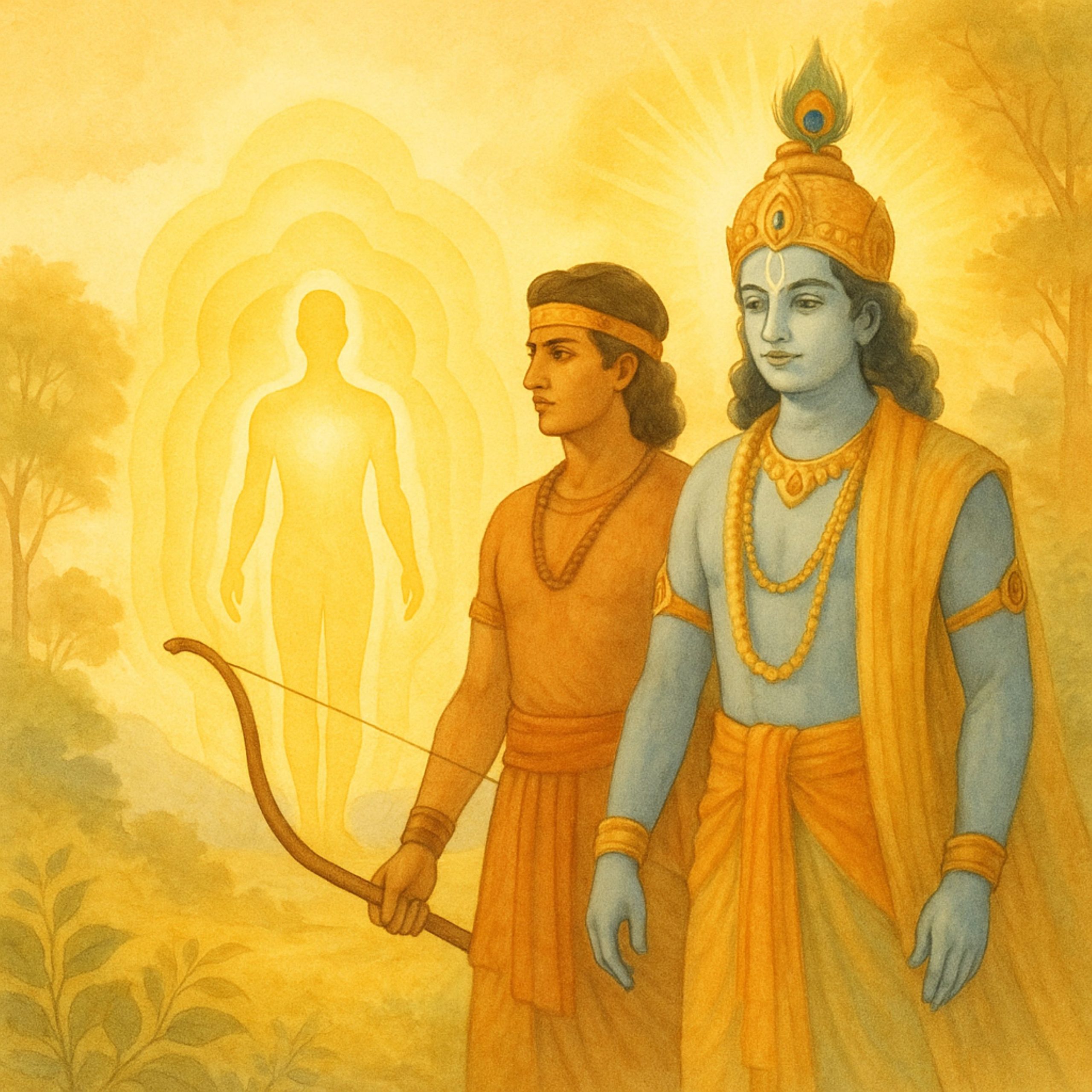
“Wherever Kṛṣṇa, the master of mystics, and Arjuna, the mighty archer, stand together, there dwell opulence, victory, prosperity, and righteousness.”
Here Sañjaya names three aspirations of worldly life—opulence, victory, prosperity—and one aspiration of inner life—righteousness. All four arise only when Kṛṣṇa and Arjuna stand together: one giving divine inspiration, the other offering disciplined effort.
𝙏𝙝𝙞𝙨 𝙞𝙨 𝙩𝙝𝙚 𝙨𝙚𝙘𝙧𝙚𝙩: 𝙢𝙖𝙩𝙚𝙧𝙞𝙖𝙡 𝙧𝙚𝙨𝙥𝙤𝙣𝙨𝙞𝙗𝙞𝙡𝙞𝙩𝙮 𝙖𝙣𝙙 𝙨𝙥𝙞𝙧𝙞𝙩𝙪𝙖𝙡 𝙖𝙨𝙥𝙞𝙧𝙖𝙩𝙞𝙤𝙣 𝙢𝙪𝙨𝙩 𝙬𝙖𝙡𝙠 𝙝𝙖𝙣𝙙 𝙞𝙣 𝙝𝙖𝙣𝙙. 𝙏𝙝𝙖𝙩 𝙞𝙨 𝙘𝙖𝙧𝙞𝙣𝙜 𝙬𝙞𝙨𝙚𝙡𝙮 𝙛𝙤𝙧 𝙩𝙝𝙚 𝙥𝙧𝙚𝙨𝙚𝙣𝙩 𝙬𝙝𝙞𝙡𝙚 𝙧𝙞𝙨𝙞𝙣𝙜 𝙨𝙩𝙚𝙖𝙙𝙞𝙡𝙮 𝙩𝙤𝙬𝙖𝙧𝙙 𝙩𝙧𝙖𝙣𝙨𝙘𝙚𝙣𝙙𝙚𝙣𝙘𝙚.
— Govind Das (ISKCON MEMBER)