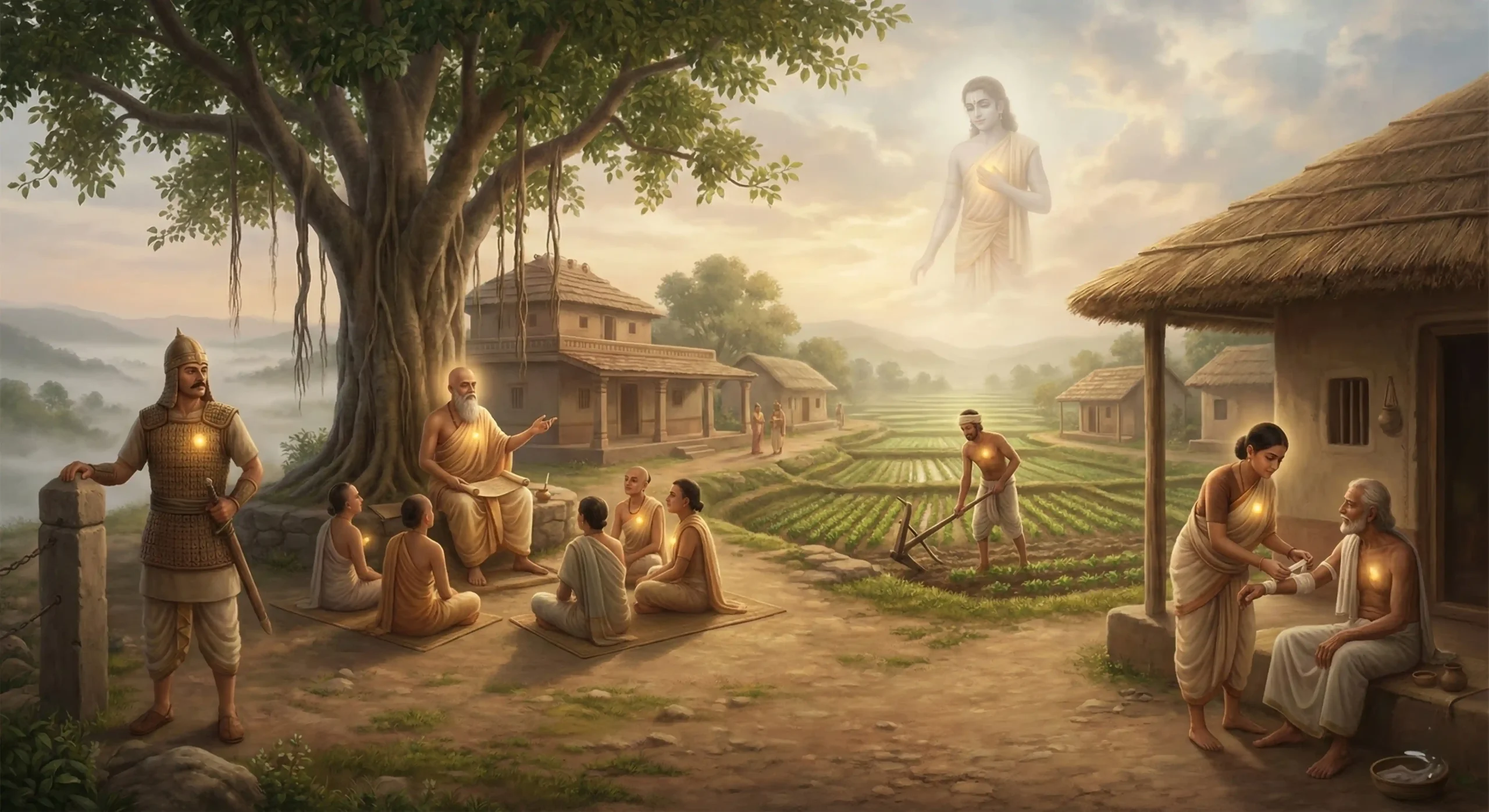
The word “𝘿𝙝𝙖𝙧𝙢𝙖”, and more importantly its living application, is the most significant element of human existence. Dharma is not belief; it is human refinement. It trains perception, conduct, and responsibility. 𝙒𝙝𝙚𝙣 𝙝𝙪𝙢𝙖𝙣 𝙗𝙚𝙞𝙣𝙜𝙨 𝙖𝙧𝙚 𝙚𝙙𝙪𝙘𝙖𝙩𝙚𝙙 𝙩𝙤 𝙨𝙚𝙚 𝙡𝙞𝙛𝙚 𝙛𝙧𝙤𝙢 𝙩𝙝𝙚 𝙨𝙩𝙖𝙣𝙙𝙥𝙤𝙞𝙣𝙩 𝙤𝙛 𝙙𝙝𝙖𝙧𝙢𝙖, 𝙢𝙖𝙣𝙮 𝙘𝙤𝙣𝙛𝙪𝙨𝙞𝙤𝙣𝙨 𝙙𝙞𝙨𝙨𝙤𝙡𝙫𝙚 𝙣𝙖𝙩𝙪𝙧𝙖𝙡𝙡𝙮—some tendencies fall away, some integrate harmoniously, and others are transcended altogether by higher understanding.
Unfortunately, in most societies today, belief and dharma exist in constant contradiction, even though faith itself can be effortlessly integrated into dharma. 𝘿𝙝𝙖𝙧𝙢𝙖 𝙜𝙤𝙫𝙚𝙧𝙣𝙨 𝙙𝙖𝙮-𝙩𝙤-𝙙𝙖𝙮 𝙡𝙞𝙛𝙚, 𝙬𝙝𝙞𝙡𝙚 𝙛𝙖𝙞𝙩𝙝 𝙜𝙤𝙫𝙚𝙧𝙣𝙨 𝙩𝙝𝙚 𝙞𝙣𝙣𝙚𝙧 𝙡𝙞𝙛𝙚. 𝘿𝙝𝙖𝙧𝙢𝙖 𝙢𝙪𝙨𝙩 𝙖𝙡𝙬𝙖𝙮𝙨 𝙨𝙪𝙥𝙚𝙧𝙨𝙚𝙙𝙚 𝙛𝙖𝙞𝙩𝙝 𝙞𝙣 𝙩𝙝𝙚 𝙚𝙭𝙩𝙚𝙧𝙣𝙖𝙡 𝙬𝙤𝙧𝙡𝙙, 𝙖𝙣𝙙 𝙛𝙖𝙞𝙩𝙝 𝙢𝙪𝙨𝙩 𝙧𝙚𝙢𝙖𝙞𝙣 𝙨𝙤𝙫𝙚𝙧𝙚𝙞𝙜𝙣 𝙞𝙣 𝙩𝙝𝙚 𝙞𝙣𝙣𝙚𝙧 𝙬𝙤𝙧𝙡𝙙. When this distinction is understood, conflict disappears.
For example, if someone asks, “Which is greater—nation or devotion?” a person grounded in dharma is not confused. Protecting the nation is an external duty within the apparent, material world; therefore, it takes precedence in action. Faith and belief, however, belong to the inner realm. There is no contradiction here. 𝙀𝙭𝙩𝙚𝙧𝙣𝙖𝙡𝙡𝙮, 𝙤𝙣𝙚 𝙨𝙚𝙧𝙫𝙚𝙨 𝙩𝙝𝙚 𝙣𝙖𝙩𝙞𝙤𝙣; 𝙞𝙣𝙩𝙚𝙧𝙣𝙖𝙡𝙡𝙮, 𝙤𝙣𝙚 𝙡𝙞𝙫𝙚𝙨 𝙞𝙣 𝙛𝙖𝙞𝙩𝙝 𝙖𝙣𝙙 𝙙𝙚𝙫𝙤𝙩𝙞𝙤𝙣. 𝙏𝙝𝙚 𝙋𝙖𝙣𝙙𝙖𝙫𝙖𝙨 𝙚𝙢𝙗𝙤𝙙𝙞𝙚𝙙 𝙩𝙝𝙞𝙨 𝙞𝙣𝙩𝙚𝙜𝙧𝙖𝙩𝙞𝙤𝙣 𝙛𝙡𝙖𝙬𝙡𝙚𝙨𝙨𝙡𝙮. Their devotion was profound—never performative, never for display. It was not demanded publicly, nor did Śrī Kṛṣṇa ever ask for external declarations of faith.
The first meeting of Arjuna and Kṛṣṇa occurred during Draupadī’s svayaṁvara. As Arjuna prepared to shoot the target, he remembered Lord Śiva within his heart and then briefly glanced at Śrī Kṛṣṇa, seeking silent approval and blessing. 𝙃𝙖𝙧𝙙𝙡𝙮 𝙖𝙣𝙮𝙤𝙣𝙚 𝙣𝙤𝙩𝙞𝙘𝙚𝙙—𝙗𝙪𝙩 𝙆𝙧𝙞𝙨𝙝𝙣𝙖 𝙣𝙤𝙩𝙞𝙘𝙚𝙙. In fact, He was already anticipating Arjuna’s victory. Arjuna executed his duty with absolute precision; the target was pierced, and Draupadī walked forward to place the garland.
In that moment, Arjuna’s private jubilation at seeing Kṛṣṇa for the first time remained inward, while winning Draupadī became a public celebration. 𝘿𝙝𝙖𝙧𝙢𝙖 𝙖𝙣𝙙 𝙥𝙧𝙚𝙢𝙖 𝙬𝙚𝙧𝙚 𝙨𝙚𝙖𝙢𝙡𝙚𝙨𝙨𝙡𝙮 𝙞𝙣𝙩𝙚𝙜𝙧𝙖𝙩𝙚𝙧—𝙞𝙣𝙣𝙚𝙧 𝙙𝙚𝙫𝙤𝙩𝙞𝙤𝙣, 𝙤𝙪𝙩𝙚𝙧 𝙧𝙚𝙨𝙥𝙤𝙣𝙨𝙞𝙗𝙞𝙡𝙞𝙩𝙮.
𝙏𝙝𝙚 𝙂𝙤𝙥𝙞𝙨 𝙤𝙛 𝙑𝙧𝙞𝙣𝙙𝙖𝙫𝙖𝙣𝙖 𝙚𝙭𝙚𝙢𝙥𝙡𝙞𝙛𝙞𝙚𝙙 𝙩𝙝𝙚 𝙨𝙖𝙢𝙚 𝙥𝙧𝙞𝙣𝙘𝙞𝙥𝙡𝙚. After returning from the Rāsa-līlā, life continued as usual. There was no public scandal, no questioning by husbands or elders, no disturbance of the daily order. 𝙏𝙝𝙞𝙨 𝙬𝙖𝙨 𝙗𝙚𝙘𝙖𝙪𝙨𝙚 𝙩𝙝𝙚 𝙍𝙖𝙨𝙖-𝙡𝙞𝙡𝙖 𝙙𝙞𝙙 𝙣𝙤𝙩 𝙤𝙘𝙘𝙪𝙧 𝙤𝙣 𝙩𝙝𝙚 𝙢𝙪𝙣𝙙𝙖𝙣𝙚 𝙥𝙡𝙖𝙣𝙚; 𝙞𝙩 𝙬𝙖𝙨 𝙣𝙚𝙫𝙚𝙧 𝙚𝙭𝙩𝙚𝙧𝙣𝙖𝙡𝙞𝙨𝙚𝙙. Śrī Kṛṣṇa did not allow the apparent world to be disrupted. 𝙀𝙭𝙩𝙚𝙧𝙣𝙖𝙡𝙡𝙮, 𝙚𝙫𝙚𝙧𝙮𝙩𝙝𝙞𝙣𝙜 𝙧𝙚𝙢𝙖𝙞𝙣𝙚𝙙 𝙥𝙚𝙧𝙛𝙚𝙘𝙩𝙡𝙮 𝙞𝙣𝙩𝙖𝙘𝙩.
𝙏𝙝𝙪𝙨, 𝙙𝙝𝙖𝙧𝙢𝙖 𝙖𝙣𝙙 𝙛𝙖𝙞𝙩𝙝 𝙖𝙧𝙚 𝙘𝙤𝙢𝙥𝙡𝙚𝙢𝙚𝙣𝙩𝙖𝙧𝙮, 𝙣𝙤𝙩 𝙤𝙥𝙥𝙤𝙨𝙞𝙣𝙜 𝙛𝙤𝙧𝙘𝙚𝙨. One governs the external; the other governs the internal. They are not poles apart. In fact, 𝙎𝙝𝙧𝙖𝙙𝙙𝙝𝙖 𝙧𝙤𝙤𝙩𝙚𝙙 𝙞𝙣 𝙙𝙝𝙖𝙧𝙢𝙖 𝙜𝙞𝙫𝙚𝙨 𝙧𝙞𝙨𝙚 𝙩𝙤 𝙖𝙪𝙨𝙥𝙞𝙘𝙞𝙤𝙪𝙨𝙣𝙚𝙨𝙨, both according to common sense and as affirmed by the Śrīmad Bhāgavatam.
– 𝙏𝙝𝙚 𝙥𝙪𝙧𝙥𝙤𝙨𝙚 𝙤𝙛 𝙙𝙝𝙖𝙧𝙢𝙖 𝙞𝙨 𝙩𝙤 𝙘𝙧𝙚𝙖𝙩𝙚 𝙡𝙚𝙜𝙖𝙘𝙮
– 𝙏𝙝𝙚 𝙥𝙪𝙧𝙥𝙤𝙨𝙚 𝙤𝙛 𝙛𝙖𝙞𝙩𝙝 𝙞𝙨 𝙩𝙤 𝙘𝙧𝙚𝙖𝙩𝙚 𝙖𝙣 𝙞𝙣𝙩𝙞𝙢𝙖𝙩𝙚 𝙧𝙚𝙡𝙖𝙩𝙞𝙤𝙣𝙨𝙝𝙞𝙥 𝙬𝙞𝙩𝙝 𝙄𝙨𝙝𝙫𝙖𝙧𝙖
𝙏𝙝𝙖𝙩 𝙟𝙞𝙫𝙖–𝙞𝙨𝙝𝙫𝙖𝙧𝙖 𝙧𝙚𝙡𝙖𝙩𝙞𝙤𝙣𝙨𝙝𝙞𝙥 𝙞𝙨 𝙞𝙣𝙝𝙚𝙧𝙚𝙣𝙩𝙡𝙮 𝙥𝙚𝙧𝙨𝙤𝙣𝙖𝙡 𝙖𝙣𝙙 𝙞𝙣𝙬𝙖𝙧𝙙, 𝙪𝙣𝙞𝙦𝙪𝙚 𝙩𝙤 𝙚𝙖𝙘𝙝 𝙞𝙣𝙙𝙞𝙫𝙞𝙙𝙪𝙖𝙡. When such private truth is publicised, institutionalised, or imposed, it disturbs dharma and gives rise to endless conflict.
Radical religionists across history have caused immense social disruption. Exclusivist ideologies have erased diverse belief systems. A striking example is Central and South America, where colonisers systematically dismantled native languages. Today, nearly nineteen South American countries speak Spanish; Brazil, which constitutes almost half of the continent, speaks Portuguese. Indigenous languages survive only at the margins. This was not accidental—Spanish colonisers officially banned native languages.
Some argue that colonial languages brought progress. This is profoundly misguided. Mainstream progress emerged only after societies loosened the grip of Christian ideological dominance and shifted toward materialism. Africa, largely controlled by France and England, speaks French and English—but this domination harmed civilisation far more than it benefited it.
These regions have become battlegrounds for radical Christianity and radical Islam, both operating through foreign languages. This has not produced growth. When people speak a language that is not their own, practice a faith that is borrowed, and adopt a lifestyle culturally foreign, subservience seeps into the subconscious. To suppress this inner dissonance, aggression intensifies—often exceeding that of the original colonisers.
Ironically, European societies have largely moved beyond Christianity, and progressive Islamic nations openly collaborate even with Israel. Yet in former colonies like India, Pakistan, and Bangladesh, sections of converts aggressively undermine ancestral cultures. It is often easier for Hindus to work in Saudi Arabia or the UAE than in radicalised pockets of the subcontinent. Though racially and geographically close, such spaces feel alien due to ideological aggression.
𝙏𝙝𝙚 𝙘𝙤𝙣𝙘𝙡𝙪𝙨𝙞𝙤𝙣 𝙞𝙨 𝙨𝙞𝙢𝙥𝙡𝙚:
– 𝙆𝙚𝙚𝙥 𝙛𝙖𝙞𝙩𝙝 𝙙𝙚𝙚𝙥 𝙞𝙣 𝙩𝙝𝙚 𝙝𝙚𝙖𝙧𝙩, 𝙣𝙤𝙩 𝙞𝙣 𝙩𝙝𝙚 𝙥𝙤𝙘𝙠𝙚𝙩.
– 𝘽𝙚𝙡𝙞𝙚𝙫𝙚 𝙬𝙝𝙖𝙩 𝙮𝙤𝙪 𝙬𝙞𝙨𝙝. 𝙁𝙤𝙧𝙢 𝙘𝙤𝙢𝙢𝙪𝙣𝙞𝙩𝙞𝙚𝙨 𝙤𝙛 𝙨𝙝𝙖𝙧𝙚𝙙 𝙗𝙚𝙡𝙞𝙚𝙛 𝙞𝙛 𝙮𝙤𝙪 𝙢𝙪𝙨𝙩—𝙗𝙪𝙩 𝙙𝙤 𝙣𝙤𝙩 𝙖𝙩𝙩𝙚𝙢𝙥𝙩 𝙩𝙤 𝙘𝙤𝙣𝙫𝙚𝙧𝙩 𝙤𝙩𝙝𝙚𝙧𝙨. That impulse is ignorance and the root of violence.
This is why dharma becomes central. 𝘿𝙝𝙖𝙧𝙢𝙖 𝙞𝙨 𝙩𝙝𝙚 𝙛𝙤𝙪𝙣𝙙𝙖𝙩𝙞𝙤𝙣 𝙤𝙛 𝙞𝙣𝙩𝙚𝙜𝙧𝙖𝙩𝙞𝙤𝙣. 𝙄𝙩 𝙞𝙨 𝙪𝙣𝙞𝙫𝙚𝙧𝙨𝙖𝙡 𝙡𝙖𝙬 𝙞𝙣 𝙢𝙤𝙩𝙞𝙤𝙣—𝙨𝙥𝙖𝙘𝙞𝙤𝙪𝙨 𝙚𝙣𝙤𝙪𝙜𝙝 𝙩𝙤 𝙝𝙤𝙡𝙙 𝙛𝙖𝙞𝙩𝙝 𝙥𝙧𝙞𝙫𝙖𝙩𝙚𝙡𝙮. 𝙁𝙖𝙞𝙩𝙝 𝙖𝙣𝙙 𝙙𝙝𝙖𝙧𝙢𝙖 𝙩𝙤𝙜𝙚𝙩𝙝𝙚𝙧 𝙜𝙚𝙣𝙚𝙧𝙖𝙩𝙚 𝙖𝙪𝙨𝙥𝙞𝙘𝙞𝙤𝙪𝙨𝙣𝙚𝙨𝙨. Faith without dharma creates Pakistan, Bangladesh, and violent distortions even within Bhārat. With dharma, we remain natural; with faith added, the heart becomes gentle and kind. 𝙒𝙞𝙩𝙝𝙤𝙪𝙩 𝙙𝙝𝙖𝙧𝙢𝙖, 𝙛𝙖𝙞𝙩𝙝 𝙩𝙪𝙧𝙣𝙨 𝙙𝙚𝙨𝙩𝙧𝙪𝙘𝙩𝙞𝙫𝙚 𝙚𝙭𝙩𝙚𝙧𝙣𝙖𝙡𝙡𝙮 𝙖𝙣𝙙 𝙝𝙖𝙧𝙙𝙚𝙣𝙚𝙙 𝙞𝙣𝙩𝙚𝙧𝙣𝙖𝙡𝙡𝙮.
𝙏𝙝𝙚𝙧𝙚𝙛𝙤𝙧𝙚 𝙪𝙣𝙞𝙫𝙚𝙧𝙨𝙖𝙡 𝙥𝙧𝙖𝙮𝙚𝙧𝙨 𝙖𝙧𝙚 𝙣𝙤𝙩 “𝙛𝙖𝙞𝙩𝙝-𝙘𝙚𝙣𝙩𝙧𝙞𝙘”; 𝙩𝙝𝙚𝙮 𝙖𝙧𝙚 “𝙬𝙤𝙧𝙡𝙙-𝙘𝙚𝙣𝙩𝙧𝙞𝙘”. A true Bhāratīya prays:
सर्वे भवन्तु सुखिनः , सर्वे सन्तु निरामयाः
सर्वे भद्राणि पश्यन्तु, मा कश्चिद् दुःखभाग्भवेत्
“May all be happy, may all be free from illness, may all see what is auspicious, may no one suffer. ”
Why this prayer is civilisationally unique:
• 𝙉𝙤 𝙚𝙣𝙚𝙢𝙮 𝙞𝙨 𝙣𝙖𝙢𝙚𝙙
• 𝙉𝙤 𝙜𝙤𝙙 𝙞𝙨 𝙗𝙚𝙜𝙜𝙚𝙙
• 𝙉𝙤 𝙧𝙚𝙬𝙖𝙧𝙙 𝙞𝙨 𝙨𝙤𝙪𝙜𝙝𝙩
• 𝙉𝙤 “𝙪𝙨 𝙫𝙚𝙧𝙨𝙪𝙨 𝙩𝙝𝙚𝙢” 𝙚𝙭𝙞𝙨𝙩𝙨
𝙈𝙮 𝙬𝙚𝙡𝙡𝙗𝙚𝙞𝙣𝙜 𝙞𝙨 𝙞𝙣𝙘𝙤𝙢𝙥𝙡𝙚𝙩𝙚, 𝙞𝙛 𝙚𝙫𝙚𝙣 𝙤𝙣𝙚 𝙞𝙣𝙙𝙞𝙫𝙞𝙙𝙪𝙖𝙡 𝙨𝙪𝙛𝙛𝙚𝙧𝙨.
𝙏𝙝𝙖𝙩 𝙞𝙨 𝘿𝙝𝙖𝙧𝙢𝙖—𝙣𝙤𝙩 𝙢𝙤𝙧𝙖𝙡𝙞𝙩𝙮.
𝙆𝙞𝙣𝙙𝙣𝙚𝙨𝙨 𝙬𝙞𝙩𝙝𝙤𝙪𝙩 𝙖𝙜𝙚𝙣𝙙𝙖 𝙞𝙨 𝙨𝙖𝙘𝙧𝙚𝙙. 𝙆𝙞𝙣𝙙𝙣𝙚𝙨𝙨 𝙬𝙞𝙩𝙝 𝙘𝙤𝙣𝙫𝙚𝙧𝙨𝙞𝙤𝙣 𝙖𝙨 𝙢𝙤𝙩𝙞𝙫𝙚 𝙞𝙨 𝙞𝙙𝙚𝙤𝙡𝙤𝙜𝙞𝙘𝙖𝙡 𝙫𝙞𝙤𝙡𝙚𝙣𝙘𝙚. 𝘾𝙝𝙖𝙧𝙞𝙩𝙮 𝙢𝙪𝙨𝙩 𝙚𝙢𝙥𝙤𝙬𝙚𝙧, 𝙣𝙤𝙩 𝙚𝙣𝙨𝙡𝙖𝙫𝙚. Let our goodwill be universal, our charity discerning, our affection dharma-centric, and our faith deeply internal.
लोकाः समस्ताः सुखिनो भवन्तु
𝘔𝘢𝘺 𝘢𝘭𝘭 𝘣𝘦𝘪𝘯𝘨𝘴 𝘣𝘦 𝘩𝘢𝘱𝘱𝘺
स्वस्ति नः इन्द्रो वृद्धश्रवाः…
𝘔𝘢𝘺 𝘸𝘦𝘭𝘭𝘣𝘦𝘪𝘯𝘨 𝘤𝘰𝘮𝘦 𝘧𝘳𝘰𝘮 𝘢𝘭𝘭 𝘥𝘪𝘳𝘦𝘤𝘵𝘪𝘰𝘯𝘢—𝘯𝘰𝘵 𝘱𝘦𝘳𝘴𝘰𝘯𝘢𝘭 𝘨𝘢𝘪𝘯, 𝘣𝘶𝘵 𝘤𝘰𝘭𝘭𝘦𝘤𝘵𝘪𝘷𝘦 𝘸𝘦𝘭𝘧𝘢𝘳𝘦.
वसुधैव कुटुम्बकम्
𝘛𝘩𝘦 𝘸𝘰𝘳𝘭𝘥 𝘪𝘴 𝘰𝘯𝘦 𝘧𝘢𝘮𝘪𝘭𝘺—𝘯𝘰𝘵 𝘦𝘮𝘰𝘵𝘪𝘰𝘯𝘢𝘭 𝘴𝘦𝘯𝘵𝘪𝘮𝘦𝘯𝘵, 𝘣𝘶𝘵 𝘰𝘯𝘵𝘰𝘭𝘰𝘨𝘪𝘤𝘢𝘭 𝘵𝘳𝘶𝘵𝘩.
ॐ शान्तिः शान्तिः शान्तिः
𝘗𝘦𝘢𝘤𝘦 𝘧𝘰𝘳 𝘵𝘩𝘦 𝘪𝘯𝘥𝘪𝘷𝘪𝘥𝘶𝘢𝘭, 𝘵𝘩𝘦 𝘦𝘯𝘷𝘪𝘳𝘰𝘯𝘮𝘦𝘯𝘵, 𝘢𝘯𝘥 𝘵𝘩𝘦 𝘤𝘰𝘴𝘮𝘰𝘴.
𝙒𝙞𝙩𝙝𝙤𝙪𝙩 𝙩𝙝𝙞𝙨 𝙫𝙞𝙨𝙞𝙤𝙣 𝙞𝙣 𝙚𝙭𝙩𝙚𝙧𝙣𝙖𝙡 𝙧𝙚𝙡𝙖𝙩𝙞𝙤𝙣𝙨, 𝙩𝙝𝙚 𝙂𝙤𝙙 𝙤𝙛 𝙤𝙪𝙧 𝙝𝙚𝙖𝙧𝙩 𝙬𝙞𝙡𝙡 𝙣𝙚𝙫𝙚𝙧 𝙩𝙧𝙪𝙡𝙮 𝙙𝙬𝙚𝙡𝙡 𝙬𝙞𝙩𝙝𝙞𝙣 𝙪𝙨.
— Govind Das (ISKCON MEMBER)