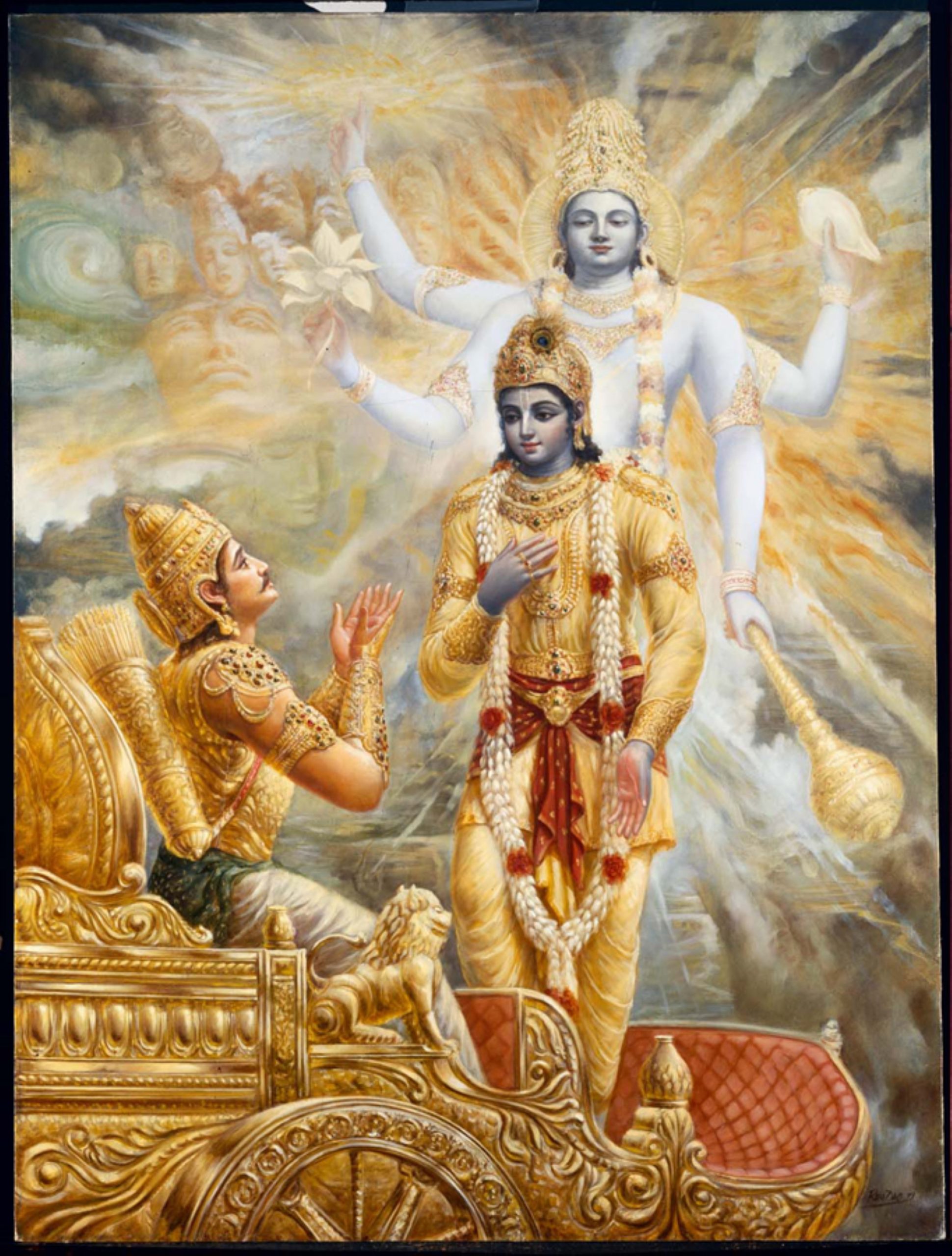
It is interesting to note that the Gītā, the eternal message of Śrī Krishna, is viewed from many perspectives—sometimes faulty, isolated, and limited, and only rarely from an integrated standpoint. The real tragedy of interpretation is that it often stems from prejudice. Prejudice itself is not always wrong, but it becomes toxic when it assumes moral superiority. The Bhagavad-gītā, however, speaks of universal truths that rise above every sect and school of thought.
The law of karma, presented by Śrī Krishna, is universal; it cannot be confined to any particular school. The truths of the three modes of nature, three kinds of śraddhā, knowledge, dāna, and vairāgya apply equally to all. Fire is not sectarian; it acts without bias, just as these eternal principles do.
Śrī Krishna focuses on what is real and eternal. His principles are not creative inventions or manufactured doctrines—they are discovered truths, clearly revealed, whether Arjuna or anyone else chooses to accept them or not. These are not Krishna’s personal preferences; they are natural, universal, and undeniable.
Many philosophical schools are purely human-made. One must have faith in them, even when they sometimes make little sense; loyalty binds people to them. For example, some German Indologists rewrote the Mahābhārata to fit invented racial theories. They even imagined a violent Aryan race and concluded absurdly that Vyāsadeva was inserted midway and had nothing to do with the Mahābhārata.
Certain Indian schools have similarly suggested that the Gītā was not spoken by Krishna but by someone else within Him—often a recent figure—an idea without any grounding. One may certainly have a personal way to see Īśvara and to worship Him; the Gītā allows that freedom. But its universal message cannot be confined to narrow interpretations. Its laws are unchangeable. When one puts a hand in fire, the fire does not check any sampradāya—it burns equally: Dvaita, Advaita, Dvaitādvaita, Viśiṣṭādvaita, or Acintya-bhedābheda.
𝙇𝙚𝙩 𝙪𝙨, 𝙩𝙝𝙚𝙧𝙚𝙛𝙤𝙧𝙚, 𝙨𝙚𝙚 𝙨𝙤𝙢𝙚 𝙪𝙣𝙞𝙫𝙚𝙧𝙨𝙖𝙡 𝙥𝙧𝙞𝙣𝙘𝙞𝙥𝙡𝙚𝙨 𝙤𝙛 𝙩𝙝𝙚 𝙂𝙞𝙩𝙖—
— Govind Das (ISKCON MEMBER)