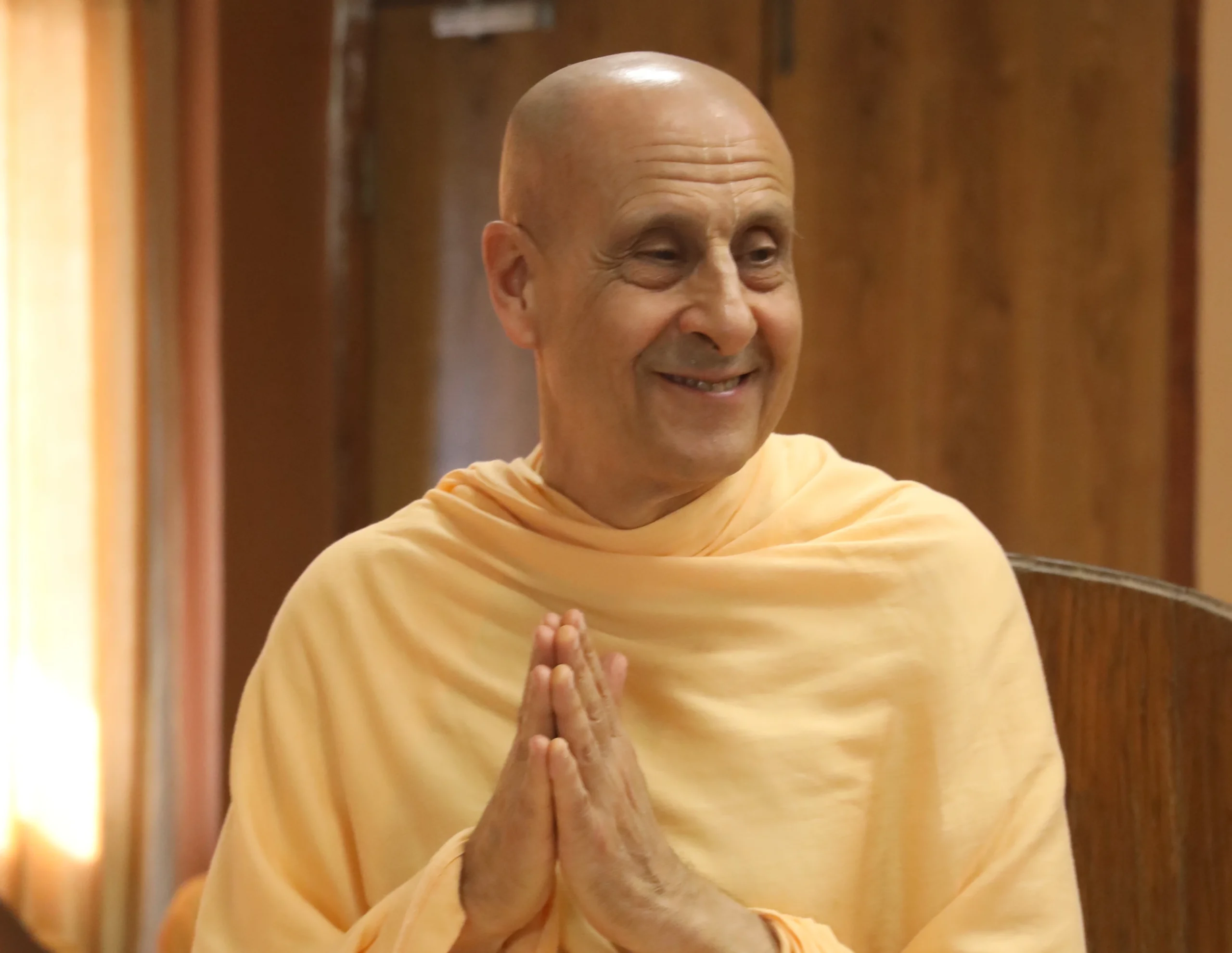
Radhanath Maharaja is completing his deeply meaningful 75 years, a journey filled with devotion, compassion, and service.
Let us peep into some of his family ancestral history. When reflecting on his ancestral roots, it is interesting to note that Maharaja’s legal surname Slavin is connected to Eastern Europe, very likely Lithuania.
In the Slavic languages spoken across regions adjoining Lithuania the root Slav– comes from two important meanings:
• slava – “glory, honour”
• Slav – referring to the Slavic people or ethnicity
Thus Slavin can be understood as “one connected with glory/honour” or “one belonging to the Slavs.” In a poetic sense, it seems as if Maharaja carried certain samskaras of honour and dignity even from birth—something beautifully hinted at in the meaning of his ancestral name and also in his journey of life.
In many Eastern European Jewish families, surnames were sometimes taken from the mother rather than the father. This happened especially when:
• the mother was deeply respected, or
• a strong matriarch shaped the family’s identity.
So Slavin may also reflect the blessing of feminine strength and maternal respect embedded in his lineage.
On the other hand, Maharaja’s given name Richard comes from old Germanic roots and means “strong ruler” or “brave leader.” Many American Jewish families adopted such names as a way to integrate into the local culture. Remarkably, the name Richard Slavin holds a beautiful harmony: the masculine strength of “Richard” blended with the gentle, dignified maternal influence implied in “Slavin.” It is a name carrying both leadership and sensitivity.
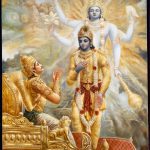
During his early years in Vrindavan, one saintly person affectionately called him “Ratheem Krishna,” a name connected to Lord Krishna as the divine charioteer of Arjuna. This endearing address, too, hinted at the destiny before him. Arjuna is known to be both refined in art and great in leadership. Both energies integrated.
When Maharaja met Srila Prabhupada, he received the spiritual name Radhanath, a name that wonderfully unites the divine feminine (Radha) and the divine masculine (Natha). Srila Prabhupada often kept the first letter of a devotee’s original name when initiating them—Howard became Hayagriva, Bruce became Brahmananda, Steve became Satsvarupa; thus Richard became Radhanath. Whether this was an inspired coincidence or guided by the Paramatma, the result was perfectly fitting: a name celebrating divine love in both its masculine and feminine dimensions and also giving the connection between ancestral and spiritual.
A Remarkable Historical Harmony
Jews have lived in India for over two millennia—and notably, they lived peacefully with the local Hindu communities. India is unique in being the only land outside Israel where three distinct Jewish ethnic groups found harmony for centuries:
This peaceful coexistence is a testimony to India’s spirit of cultural respect and openness.
For more than two thousand years, India has been home to multiple Jewish communities, each arriving at different points in history and settling in different regions—yet all finding peace, dignity, and acceptance on Indian soil. Among the earliest were the Cochin Jews, who trace their arrival to as early as 1000–500 BCE, with another significant group reaching Kerala after the destruction of the Second Temple in 70 CE. These Jews were of Mizrahi Middle Eastern descent and flourished particularly around Cochin
Another early community, known as the Bene Israel, is believed to have reached the western coast of India around the 2nd century BCE. Their roots are considered to be ancient Jewish, connected to the Middle Eastern world, and they gradually settled along the Konkan region. Over time, many of them became part of the growing Jewish community in Mumbai.
Centuries later, during the 1700s and 1800s, another wave of Jewish migrants arrived—this time known as the Baghdadi Jews. Coming mainly from Iraq and Syria, they established thriving communities in major trading cities such as Mumbai, Kolkata, and Surat. Their presence added a distinct Middle Eastern–Sephardic flavour to India’s Jewish mosaic, especially visible in the synagogues, schools, and charitable institutions they built.
There is also the intriguing group known as the Bnei Menashe, whose origins are connected both to ancient traditions and a modern rediscovery of Jewish identity. They are drawn from Tibeto-Burman communities of India’s northeast and maintain a lineage they believe connects them to the lost tribes of Israel. Today, many of them live in Manipur and Mizoram, where they continue to practice a unique form of Judaism shaped by their ancestral customs and newly revived traditions.
From the island of Crete in Greece, Richard Slavin felt a powerful inspiration to travel to India. Whether he ever met Indian Jews is unknown, but India embraced him fully—especially the sacred land of Vrindavan, where his heart found its home. His meeting with Srila Prabhupada in Mumbai became a turning point.
His book The Journey Home later reached thousands worldwide and was even translated into Lithuanian—a moment of deep significance, connecting Maharaja’s spiritual journey back to his ancestral roots. His visit to Lithuania brought joy to his father and offered the Lithuanian people the timeless message of Sri Krishna.
Lithuanian is one of the world’s oldest Indo-European languages and retains echoes of Sanskrit. Though Maharaja does not speak Lithuanian, the Sanskrit mantras he chants daily carry ancient vibrations that linguistically connect to that region. A few striking similarities include:
• Sanskrit: Deva (देव)
Lithuanian: Dievas – God, divine being
• Sanskrit: Dyaus (द्यौस्)
Lithuanian: Dangūs – sky, heaven
• Sanskrit: Agni (अग्नि)
Lithuanian: Ugnis – fire
• Sanskrit: Mātā (माता)
Lithuanian: Motina – mother
• Sanskrit: Pitā (पिता)
Lithuanian: Tėvas – father
Such resonances show how Sanskrit, the language of the devas, echoes across distant lands—even into Maharaja’s ancestral heritage.
Yet ultimately, beyond all ethnicities and linguistic connections, Maharaja offers the universal mantra of love, the Hare Krishna Mahāmantra, which speaks to the soul rather than to any particular culture.
On 7th December 2025, Radhanath Maharaja completes 75 extraordinary years—years dedicated to Srila Prabhupada, to the worship of Sri Sri Radha Gopinath, and to the upliftment of countless devotees and spiritual seekers across the world.
May he be blessed with health, strength, and ever-deepening inspiration.
May he continue to touch hearts, transform lives, and guide thousands on the path of divine love.
Our humble prayers remain with him, now and always.
— Govind Das (ISKCON MEMBER)