
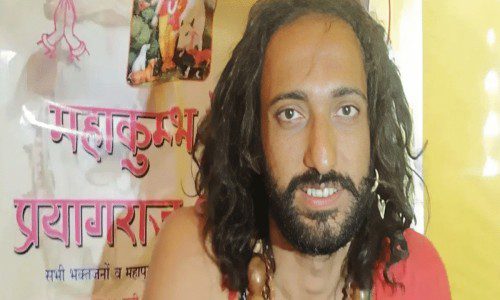
 In the 𝘒𝘶𝘮𝘣𝘩 𝘔𝘦𝘭𝘢, a seeker dressed in Babaji attire, a former IIT Mumbai student, has become an internet sensation.
At times, he delivers profound insights; at others, he vents his frustrations, often aimed at his parents. His free-flowing thoughts swing between logical clarity and, to some, bewildering abstraction.
He doesn’t claim to be a Sadhu, yet he dresses like one. Unaffiliated with any system, path, or Guru, he speaks of disconnecting from everything to become non-existent, yet paradoxically seeks growth.
In my observation, he is the embodiment of an inner conflict: a brilliant philosophical mind, a joyous seeker, a son crushed by the weight of emotional trauma, and an individual still seeking excellence with greater heights, now sharing his knowledge on social media, but wanting nothingness.
The path of dharma-centric adhyatma (𝘴𝘱𝘪𝘳𝘪𝘵𝘶𝘢𝘭𝘪𝘵𝘺) is a harmony of the abstract and the concrete. It is a synthesis of discipline and free-flowing thoughts, a balance between tradition (𝘱𝘢𝘳𝘢𝘮𝘱𝘢𝘳𝘢) and the infinite. It is love infused with logic and action tempered with detachment. It reconciles complete dependence with self-reliance, shunya (𝘦𝘮𝘱𝘵𝘪𝘯𝘦𝘴𝘴) with purna (𝘧𝘶𝘭𝘭𝘯𝘦𝘴𝘴), and duality (𝘣𝘩𝘦𝘥𝘢) with non-duality (𝘢𝘣𝘩𝘦𝘥𝘢). It expresses affection for family while internally renouncing all that is transient.
Sripad Shankaracharya boldly declared “𝘫𝘢𝘨𝘢𝘯 𝘮𝘪𝘵𝘩𝘺𝘢” (the world is an illusion) yet composed the beautiful “𝘔𝘢𝘵𝘳𝘶 𝘗𝘢𝘯𝘤𝘩𝘢𝘬𝘢𝘮,” glorifying his mother. This illustrates that unless philosophical truth is harmonized with cultural reality, it can undermine the very purpose of life’s legacy.
In the Bhagavad Gita, Sri Krishna revealed to Arjuna that he is not merely his body but the atman (𝘴𝘰𝘶𝘭). Yet, in the very next verse, Krishna acknowledges Arjuna’s ties to his family on both sides. Here, truth and reality were seamlessly harmonized. One who attains this harmony is a real yogi — reconciling relationships while transcending them, seeing the action itself as an expression of nothingness.
𝘚𝘶𝘤𝘩 𝘢 𝘱𝘦𝘳𝘴𝘰𝘯, 𝘸𝘩𝘰 𝘣𝘢𝘭𝘢𝘯𝘤𝘦𝘴 𝙧𝙚𝙨𝙥𝙤𝙣𝙨𝙞𝙗𝙞𝙡𝙞𝙩𝙮 𝙬𝙞𝙩𝙝 𝙙𝙚𝙩𝙖𝙘𝙝𝙢𝙚𝙣𝙩 𝘢𝘯𝘥 𝙙𝙚𝙫𝙤𝙩𝙞𝙤𝙣 𝙬𝙞𝙩𝙝 𝙠𝙣𝙤𝙬𝙡𝙚𝙙𝙜𝙚, 𝘦𝘮𝘣𝘰𝘥𝘪𝘦𝘴 𝘵𝘩𝘦 𝘦𝘴𝘴𝘦𝘯𝘤𝘦 𝘰𝘧 𝘣𝘰𝘵𝘩 “𝙗𝙝𝙖𝙠𝙩𝙞” 𝘢𝘯𝘥 “𝙟𝙣𝙖𝙣𝙖”.
-Govinda Das