How can Vedānta and the Dāmodara Līlā have any similarities? One is filled with the pure ambrosia of divine mellows, and the other, a refined exercise in hair-splitting logic and reason. They stand apart—not merely in contrast, but in essence itself. Yet, the beauty of the śāstra lies precisely in the harmonization of the so-called opposites. In truth, there is nothing that stands in opposition.
One path is purely devotional, springing from the heart, while the other is rigorous, profound, and grounded in reason and logic. One demands that one’s entire being become heart-centered, while the other remains steadfastly buddhi-centric. How, then, can they ever meet—let alone marry?
Yes, they can meet. They do marry—in their divine conclusion. Vedānta concludes one truth, and Bhakti manifests that very truth as living experience.
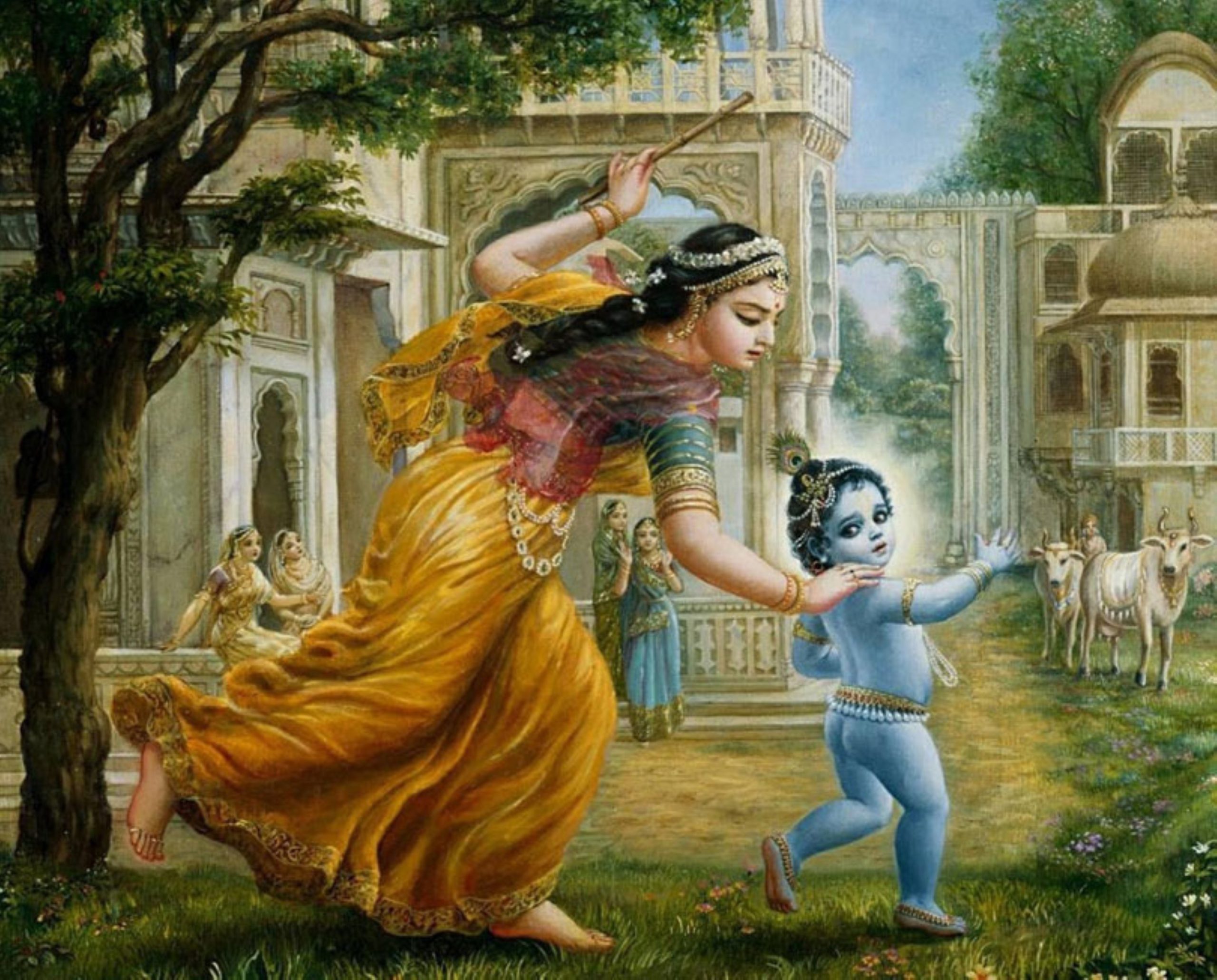
When Mother Yaśodā failed to tie Śrī Krishna after countless endeavors—each time adding more rope, yet finding it still two fingers too short—this is pure Vedānta philosophy expressed through devotional action. The Damodara Lila is heart-capturing, stunning, and deeply fascinating; yet hidden within it lies the profound Vedāntic idea. Eventually, when Sri Krishna chose, He allowed Himself to be bound.
In the Gītā, Sri Krishna quotes Vedānta:
“O mighty-armed Arjuna, according to the Vedānta there are five causes for the accomplishment of all action. Now learn of these from Me.” (18.13)
“The place of action—the body, the performer, the various senses, the many different kinds of endeavor, and ultimately the Supersoul—these are the five factors of action.” (18.15)
In the thirteenth verse Sri Krishna gives the reference, and in the fourteenth, He gives a brilliant purport to the Damodara Lila.
Four aspects belong to human endeavor: the place of action (the attempt to bind Sri Krishna’s belly), the instruments of action (the ropes, Yaśodā’s hands, the gopīs assisting, and the grinding mortar), the endeavor itself (her sweating, tireless attempts), and the performer (Yaśodā and her helpers, desperate to bind Him). The fifth factor is Daiva—Sri Krishna’s own will, His divine consent to be bound, to make His mother happy and to prevent her from further exertion.
She tried with all four, as described in the Gītā, yet without the fifth—the Krishna factor—nothing reached completion. And still, without the four, the fifth would not reciprocate. It is the divine harmony of human endeavor and Śrī Īśvara’s gracious consent that makes all things work.
Thus, when we study this section of the Gītā, we can connect it to the Dāmodara Līlā. And when we are absorbed and captivated by the pastimes of Śrī Krishna, we may rest assured that some deep Vedāntic truth is silently at work. It is not necessary to analyze while relishing the beautiful stories of Śrī Hari, yet we can be certain—Vedānta is there, hidden and alive, gently breathing beneath the poetry of devotion.
And in time, it will reveal itself when we read the Gītā. Next, we shall study the Govardhana Līlā, where karma itself rises above and transcends the mere worship of the devas.
– Govind Das (ISKCON MEMBER)